ఏపీపీఎస్సీ గ్రూప్-1 ప్రిలిమ్స్ 1994
138 ప్రశ్నలు, ప్రతిదానికి అధికారిక సమాధానం మరియు వివరణ.
ఒకే ప్రశ్న పలు సంవత్సరాల్లో వస్తే, మొదటిసారి అడిగిన సంవత్సరం కింద చూపిస్తాం.
- Q81World regional geography
Which is the most heavily guarded international border in the world?
- aIndo-Pak border
- bChina-Russia border
- cNorth Korea-South Korea borderసరైన సమాధానం
- dNone of the above
వివరణ
Option C is correct because the Demilitarized Zone established along the 38th parallel between North Korea and South Korea is lined with millions of landmines, electrified fencing, and hundreds of thousands of active troops, making it the most heavily guarded border globally. Option A: Indo-Pak border is heavily militarised but does not match the density of fortifications and troops present along the Korean DMZ. Option B: China-Russia border is largely settled and demilitarised under mutual bilateral treaties. Option D: None of the above is incorrect because the Korean DMZ is universally recognised as the correct answer.
- Q82Ecology and ecosystems
Which of the following is the correct food chain?
- aGrass - Wolf - Deer - Buffalo
- bGrass - Insect - Bird - Snakeసరైన సమాధానం
- cBacteria - Grass - Rabbit - Wolf
- dBacteria - Insect - Snake - Deer
వివరణ
Option B is correct because it depicts a valid and functional grazing food chain where grass is eaten by insects, insects are eaten by birds, and birds are eaten by snakes. Option A: Wolves are carnivores and do not feed directly on grass, nor do buffalo feed on deer. Option C: Bacteria are decomposers rather than primary producers positioned at the start of a grazing food chain. Option D: Bacteria are not primary producers, snakes do not feed on insects to pass energy to deer, and deer are herbivores that do not eat snakes.
- Q83Ecology and ecosystems
What does ecological succession indicate the interrelationship of?
- aAmong living things in nature.
- bPlants, animals, sun
- cLiving, non-living, and energy cycles in natureసరైన సమాధానం
- dMicrobes, animals, plants, solar system
వివరణ
Option C is correct because ecological succession involves progressive modifications of both the biotic communities (living) and the physical habitat (non-living substrate, microclimate), governed by and altering natural biogeochemical and energy cycles over time. Option A: It ignores the abiotic environment and biogeochemical cycles that change during succession. Option B: It limits the scope to a narrow set of organisms and sunlight, excluding soil development, nutrient cycles, and decomposers. Option D: It references the astronomical solar system rather than the ecological interaction of communities with their immediate biophysical habitat.
- Q84Climate change: policy and response
Where was the ozone hole recently observed?
- aAfrica
- bAntarcticaసరైన సమాధానం
- cAmerica
- dAndaman
వివరణ
Option B is correct because the seasonal depletion of the stratospheric ozone layer, commonly referred to as the ozone hole, develops predominantly over Antarctica during the Southern Hemisphere spring due to extreme cold and polar stratospheric clouds. Option A: Africa does not experience the isolated polar vortex and extremely low temperatures necessary for significant ozone depletion. Option C: America is located outside the polar region where severe stratospheric ozone depletion occurs. Option D: Andaman lies in the tropical region, where the atmospheric dynamics necessary for ozone hole formation do not exist.
- Q85Environmental law, institutions and treaties
Due to which of the following was the right to life in Article 21 expanded to include the right to live in a clean environment?
- aRural court cases in Kerala
- bManeka Gandhiసరైన సమాధానం
- cEdiyad case
- dBhopal case
వివరణ
Option B is correct because the Supreme Court judgment in the Maneka Gandhi case (1978) fundamentally broadened the interpretation of Article 21 from mere animal existence to a life of dignity, which subsequently enabled the judiciary to read the right to a wholesome and clean environment into the right to life. Option A: Rural court cases in Kerala dealt with local environmental grievances rather than establishing the broad constitutional doctrine expanding Article 21. Option C: The Ediyad case is not a recognized landmark Supreme Court precedent for the expansion of Article 21. Option D: The Bhopal case dealt primarily with absolute liability, mass tort compensation, and industrial disaster management rather than originating this interpretive shift of Article 21.
- Q86Defence technology
Recently, a medium-range missile successfully launched from Chandigarh, from India's which hits a surface target
- aPrithviసరైన సమాధానం
- bAbras-1B
- cRohini
- dAgni
అధికారిక సమాధానం చూపించాం. వివరణ సమీక్షలో ఉంది.
- Q87SCHOOL BIOLOGY: life sciences as the papers actually ask them
What produces energy in a cell
- aChloroplast
- bNucleus
- cEnzyme
- dMitochondriaసరైన సమాధానం
వివరణ
Option D is correct because mitochondria are the primary sites of cellular respiration, breaking down nutrients to produce usable energy in the form of ATP. Option A: Chloroplast is responsible for photosynthesis in plant cells by absorbing solar energy, rather than generating metabolic ATP for general cellular work. Option B: Nucleus houses the genetic material of the cell and regulates cellular activities rather than producing cellular energy. Option C: Enzyme is a biological catalyst that accelerates chemical reactions, not an organelle that produces cellular energy.
- Q88SCHOOL BIOLOGY: life sciences as the papers actually ask them
Edible part of the mother
- aUnderground stem
- bUnderground leaves of the plant
- cModified fleshy underground leaves, and stemసరైన సమాధానం
- dMilk, leaves, and stem of the plant
వివరణ త్వరలో.
- Q89SCHOOL BIOLOGY: life sciences as the papers actually ask them
Cause of Niriritam
- aLack of magnesium in the soilసరైన సమాధానం
- bLack of magnesium in the plant
- cLack of chlorophyll
- dLack of chloroplast
అధికారిక సమాధానం చూపించాం. వివరణ సమీక్షలో ఉంది.
- Q90SCHOOL BIOLOGY: life sciences as the papers actually ask them
What is the angular growth of horns called?
- aPlagiotropismసరైన సమాధానం
- bGravitropism
- cPhototropism
- dHydrotropism
వివరణ
Option A is correct because plagiotropism refers to growth oriented at an oblique angle to the primary directional stimulus such as gravity, commonly used in anatomy and botany to describe angular growth patterns. Option B: Gravitropism refers strictly to growth oriented directly parallel (positive or negative) to the vector of gravity. Option C: Phototropism is directional growth in response to a light stimulus. Option D: Hydrotropism is directional growth in response to moisture or water gradients.
- Q91SCHOOL BIOLOGY: life sciences as the papers actually ask them
Darwin's proposed theory of organic evolution was based on what?
- aInheritance of acquired characteristics
- bNatural selectionసరైన సమాధానం
- cFinches
- dGeographical isolation
వివరణ
Option B is correct because Charles Darwin proposed natural selection as the principal mechanism of organic evolution, whereby individuals with favourable variations are more likely to survive and reproduce. Option A: Inheritance of acquired characteristics is the core concept of Lamarckism, formulated by Jean-Baptiste Lamarck. Option C: Finches observed on the Galapagos Islands served as empirical evidence of adaptive radiation, not the name of the overarching evolutionary theory. Option D: Geographical isolation is an isolating mechanism that aids speciation, but it is not the foundation of Darwin's evolutionary theory.
- Q92SCHOOL BIOLOGY: life sciences as the papers actually ask them
Who discovered the DNA molecule model?
- aWatson and Crickసరైన సమాధానం
- bHar Gobind Khorana
- cSwaminathan
- dJ.C. Bose
వివరణ
Option A is correct because James Watson and Francis Crick deciphered and proposed the double-helical model of the DNA molecule in 1953. Option B: Har Gobind Khorana is celebrated for deciphering the genetic code and synthesizing the first artificial gene, not discovering the DNA double helix model. Option C: Swaminathan is recognized as the father of the Green Revolution in India for his work on high-yielding wheat varieties. Option D: J.C. Bose made pioneering contributions to plant physiology and wireless communication, not nucleic acid structural biology.
- Q93SCHOOL BIOLOGY: life sciences as the papers actually ask them
On what does the sex determination of a male child depend?
- aFatherసరైన సమాధానం
- bMother
- cMother-Father
- dMale hormone, testosterone
వివరణ
Option A is correct because the father produces two types of sperm carrying either an X or a Y chromosome, and the child develops into a male only when an ovum is fertilised by a Y chromosome-bearing sperm from the father. Option B: The mother contributes only an X chromosome through the ovum and therefore does not determine whether the child will be male or female. Option C: While both parents contribute genetic material, sex determination specifically depends solely on the sperm type provided by the father. Option D: Testosterone directs male phenotypic differentiation during embryogenesis, but sex determination at conception is established entirely by the father's sex chromosome.
- Q94SCHOOL BIOLOGY: life sciences as the papers actually ask them
What is the cause of Foot-and-Mouth disease in cattle?
- aBacteria
- bFungi
- cVirusసరైన సమాధానం
- dProtozoa
వివరణ
Option C is correct because Foot-and-Mouth Disease is an acute, highly communicable viral infection of domestic and wild cloven-hoofed animals, caused by an Aphthovirus belonging to the family Picornaviridae. Option A: Bacteria cause infections like anthrax and blackleg, not Foot-and-Mouth disease. Option B: Fungi cause dermatomycoses such as ringworm, not this vesicular viral disease. Option D: Protozoa are responsible for diseases like babesiosis and theileriosis.
- Q95HUMAN BODY, NUTRITION AND DISEASE
What is the reason for blood not clotting in blood vessels?
- aAbsence of fibrinసరైన సమాధానం
- bPresence of thromboplastin
- cAbsence of fibrinogen
- dAbsence of calcium
వివరణ
Option A is correct because blood remains fluid inside intact blood vessels because insoluble fibrin threads are absent, as the coagulation cascade is not activated. Option B: Thromboplastin initiates blood coagulation upon tissue trauma and is not present in active form to prevent clotting. Option C: Fibrinogen is normally present in blood plasma as an abundant, soluble precursor protein. Option D: Calcium ions are constantly present in circulating blood and are necessary for normal physiology as well as clotting.
- Q96HUMAN BODY, NUTRITION AND DISEASE
Insulin is a?
- aFat
- bHormoneసరైన సమాధానం
- cPigment
- dEnzyme
వివరణ
Option B is correct because insulin is a peptide hormone produced by the endocrine pancreas to regulate the metabolism of carbohydrates, fats, and proteins. Option A: Insulin is composed of amino acid chains linked by disulfide bonds, not fatty acids or lipids. Option C: Insulin does not provide color to biological tissues and is not a pigment. Option D: Insulin is a signaling chemical messenger, not an enzyme that directly catalyzes biochemical conversions.
- Q97HUMAN BODY, NUTRITION AND DISEASE
The most important source of Calcium is?
- aMeat
- bEgg
- cMilkసరైన సమాధానం
- dAll
వివరణ
Option C is correct because milk and dairy products are the richest and most readily absorbable dietary sources of calcium for the human body. Option A: Meat provides protein, iron, and B vitamins, but contains very little calcium. Option B: Egg contains most of its calcium in the inedible shell, while the edible portion contains relatively small amounts compared to milk. Option D: All is incorrect because meat and the edible parts of eggs are not significant calcium sources.
- Q98SCHOOL CHEMISTRY
What is obtained from carbon?
- aKanthiyam
- bFerrogenసరైన సమాధానం
- cCarbon
- dDermatogen
వివరణ త్వరలో.
- Q99SCHOOL CHEMISTRY
Who discovered the insecticidal property of DDT?
- aPaul Müllerసరైన సమాధానం
- bStanley Miller
- cT.H. Morgan
- dT.R. Malthus
వివరణ
Option A is correct because the Swiss chemist Paul Hermann Müller discovered the insecticidal properties of DDT (dichlorodiphenyltrichloroethane) in 1939, for which he was awarded the Nobel Prize in Physiology or Medicine in 1948. Option B: Stanley Miller is known for the Miller-Urey experiment simulating prebiotic chemical evolution, not for research on insecticides. Option C: T.H. Morgan is known for his work on the genetic role of chromosomes using Drosophila melanogaster. Option D: T.R. Malthus was an economist and demographer famous for his theories on population growth.
- Q100SCHOOL CHEMISTRY
Glucose is a?
- aReducing sugarసరైన సమాధానం
- bNon-reducing sugar
- cDerived from protein
- dNone of these
వివరణ
Option A is correct because glucose has a free aldehyde group on its open-chain structure that readily oxidizes, allowing it to reduce Fehling's solution, Benedict's reagent, and Tollens' reagent. Option B: Non-reducing sugars lack free anomeric hydroxyl groups, such as sucrose, which cannot act as a reducing agent. Option C: Glucose is a carbohydrate formed through photosynthesis, not a derivative of amino acids or proteins. Option D: None of these is incorrect because reducing sugar accurately characterizes glucose.
- Q101SCHOOL PHYSICS
The reason for the blue color of the sky
- aReflection of light
- bRefraction of light
- cDiffraction of light
- dScattering of lightసరైన సమాధానం
వివరణ
Option D is correct because sunlight entering the atmosphere undergoes Rayleigh scattering by gas molecules, which scatters shorter wavelengths like blue far more effectively than longer wavelengths. Option A: Reflection bounces light off surfaces without selectively separating shorter wavelengths across the sky. Option B: Refraction bends light through differing air densities, causing effects like mirages rather than the uniform blue coloration of the sky. Option C: Diffraction causes light to bend around obstacles and produces rings or fringes rather than widespread blue scattering.
- Q102SCHOOL PHYSICS
The speed of sound in humid air
- ais less than in dry air
- bis more than in dry airసరైన సమాధానం
- cis equal to that in dry air
- ddoes not depend on humidity
వివరణ
Option B is correct because water vapor is less dense than dry air, which lowers the overall density of the air mixture and causes sound to propagate faster. Speed of sound formula: v = square root of (gamma * P / rho) Molar mass of water vapor: 18 g/mol Average molar mass of dry air: approximately 29 g/mol Option A: Sound travels faster in humid air because the density of the medium is reduced. Option C: The presence of water vapor reduces the bulk density of air, so the speeds cannot be equal. Option D: Humidity alters the density of air, directly changing the speed of sound.
- Q103SCHOOL PHYSICS
Applied current
- amay be 90 degrees lagging to voltageసరైన సమాధానం
- bmay be 90 degrees leading to voltage
- cmay be in the same phase with voltage
- dmay be 90 degrees lagging or 90 degrees leading to voltage
వివరణ త్వరలో.
- Q104SCHOOL PHYSICS
Two electric bulbs have tungsten filaments. The resistance of these two is r and R respectively (R is greater than r). If these two bulbs are connected in series,
- aThe bulb with resistance r glows brighter.
- bThe bulb with resistance R glows brighter.సరైన సమాధానం
- cBoth glow with the same brightness.
- dNothing can be said for sure.
వివరణ
Option B is correct because both bulbs share the same electric current in a series circuit, and power dissipation increases directly with resistance. In a series circuit, the current I passing through both bulbs is identical. Power dissipated as light and heat is P = I^2 * R. Because R is greater than r, the power dissipated across R is greater than across r. Option A: The bulb with smaller resistance r dissipates less electrical power when current is constant. Option C: The bulbs dissipate different amounts of electrical power because their resistance values are not equal. Option D: The brightness can be definitively calculated using the series current relationship and Joule heating law.
- Q105SCHOOL PHYSICS
The source of energy in the Sun?
- aSpontaneous
- bRadioactive disintegration
- cNuclear fission
- dNuclear fusionసరైన సమాధానం
వివరణ
Option D is correct because the source of energy in the Sun is nuclear fusion, where hydrogen nuclei fuse together under extreme temperature and pressure to form helium, releasing enormous amounts of energy. Option A: Spontaneous is wrong because spontaneous chemical changes do not have the energy density required to power stars. Option B: Radioactive disintegration is wrong because radioactive decay accounts for only minor internal planetary heating, not stellar energy output. Option C: Nuclear fission is wrong because fission involves splitting heavy nuclei like uranium, which is not the process driving the Sun.
- Q106SCHOOL PHYSICS
The instrument used to measure humidity
- aThermometer
- bBarometer
- cHygrometerసరైన సమాధానం
- dHydrometer
వివరణ
Option C is correct because a hygrometer measures humidity, which is the concentration of water vapor present in the air or other gases. Option A: measures ambient or body temperature. Option B: measures atmospheric pressure to forecast weather patterns. Option D: measures the density or specific gravity of liquids relative to water.
- Q107Logical reasoning and analytical ability
B is greater than C, X is smaller than C. But C is never greater than B, therefore
- aX is never greater than Bసరైన సమాధానం
- bX is never smaller than B
- cX is never smaller than C
- dNone of these
వివరణ
Option A is correct because combining the given inequalities yields B > C > X, which establishes that B is strictly greater than X, meaning X can never be greater than B. B > C C > X Combining the two: B > C > X Therefore, B > X, so X < B Option B: contradicts the inequality B > X, which shows X is always strictly smaller than B. Option C: contradicts the premise X < C, which explicitly states X is smaller than C. Option D: an absolute conclusion is validly derived from the given statements.
- Q108Logical reasoning and analytical ability
Answer questions 131 to 134 on the basis of the following: A causes B or C, but not both. F occurs only when B occurs. D occurs when B or C occurs. E occurs only when C occurs. J occurs only when E or F occurs. D causes G or H or both. H occurs when E occurs. G occurs when F occurs. When A occurs, what can occur?
- aF and H
- bE and H
- cD only
- dF, G and Dసరైన సమాధానం
వివరణ త్వరలో.
- Q109Logical reasoning and analytical ability
Answer questions 131 to 134 on the basis of the following: A causes B or C, but not both. F occurs only when B occurs. D occurs when B or C occurs. E occurs only when C occurs. J occurs only when E or F occurs. D causes G or H or both. H occurs when E occurs. G occurs when F occurs. When B occurs, what occurs?
- aF and Gసరైన సమాధానం
- bBoth E and F
- cD
- dD and H
వివరణ త్వరలో.
- Q110Logical reasoning and analytical ability
Answer questions 131 to 134 on the basis of the following: A causes B or C, but not both. F occurs only when B occurs. D occurs when B or C occurs. E occurs only when C occurs. J occurs only when E or F occurs. D causes G or H or both. H occurs when E occurs. G occurs when F occurs. When J occurs, what occurs?
- aEసరైన సమాధానం
- bBoth E and F
- cG
- dB or C
వివరణ త్వరలో.
- Q111Logical reasoning and analytical ability
Answer questions 131 to 134 on the basis of the following: A causes B or C, but not both. F occurs only when B occurs. D occurs when B or C occurs. E occurs only when C occurs. J occurs only when E or F occurs. D causes G or H or both. H occurs when E occurs. G occurs when F occurs. When it is not known what occurred, what is likely to occur?
- aD onlyసరైన సమాధానం
- bD and A
- cD and F
- dD, A and F
వివరణ త్వరలో.
- Q112Logical reasoning and analytical ability
Find the missing number in the figure?
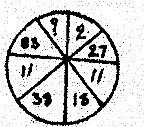
- a6సరైన సమాధానం
- b42
- c111
- dNone of these
వివరణ త్వరలో.
- Q113Logical reasoning and analytical ability
All members of the Tennis Club are also members of the Badminton Club. No woman plays Badminton. Which of the following is true?
- aNo member of the Tennis Club plays Badminton
- bSome women are members of the Tennis Club
- cSome women play Tennis
- dNo woman is a member of the Tennis Clubసరైన సమాధానం
వివరణ
Option D is correct because all Tennis Club members are Badminton Club members, and since no woman plays badminton, it is impossible for any woman to belong to the Tennis Club. Option A: The premise explicitly states that all Tennis Club members are members of the Badminton Club. Option B: A woman cannot belong to the Tennis Club without also belonging to the Badminton Club, which contradicts the premise. Option C: The premises do not support this claim and establish that women cannot belong to the Tennis Club.
- Q114Series, analogy and odd man out
What is the next number in this series? 3, 7, 10, 11, ?
- a16
- b17సరైన సమాధానం
- c18
- d25
అధికారిక సమాధానం చూపించాం. వివరణ సమీక్షలో ఉంది.
- Q115Shapes, figures and Venn diagrams
How many triangles are there in the following figure?
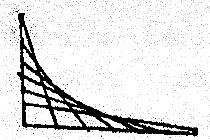
- a21
- b42
- c111
- dNone of theseసరైన సమాధానం
వివరణ త్వరలో.
- Q116Shapes, figures and Venn diagrams
All faces of a cube are colored. The bottom face is red, and the top face is white. Green, yellow, blue, and pink colors are painted on each vertical face in a clockwise direction. If the yellow colored face is the bottom face, what is the color of the top face?
- aRed
- bPinkసరైన సమాధానం
- cBlue
- dGreen
వివరణ
Option B is correct because in a cube with adjacent vertical faces painted green, yellow, blue, and pink clockwise, the face opposite to yellow is pink, so placing yellow at the bottom places pink at the top. Top face is opposite to bottom face: White is opposite to Red Clockwise cyclic order of vertical faces: Green, Yellow, Blue, Pink Opposite vertical face pairs: Green is opposite to Blue; Yellow is opposite to Pink When Yellow is at the bottom, its opposite face Pink must be at the top Option A: Red is opposite to White, not Yellow. Option C: Blue is opposite to Green, adjacent to Yellow. Option D: Green is opposite to Blue, adjacent to Yellow.
- Q117Number system and basic operations
♦ means Division, ♢ means Addition, ∆ means Equal to, Φ means Division, Θ means Multiplication. Then which of the following is true?
- a(6 + 2) ÷ 2 = (2 × 8) ÷ 1
- b(81 ÷ 4) × 3 = 4 ÷ 16 ÷ 3
- c(18 ÷ 4) × 3 = (8 ÷ 15) × 7
- d(15 ÷ 4) × 3 = (60 ÷ 2) + 3సరైన సమాధానం
వివరణ త్వరలో.
- Q118Number system and basic operations
In a cup of 154 coats, white coats are 3 less than red coats. White coats are 5 more than green coats. If the coats are in red, white, and green colors, how many red coats are there?
- a50
- b55సరైన సమాధానం
- c60
- d64
వివరణ
Option B is correct because expressing all coats in terms of red coats and equating their sum to 154 yields 55 red coats. Let the number of red coats be R. White coats = R - 3 Green coats = (R - 3) - 5 = R - 8 Total coats = R + (R - 3) + (R - 8) = 154 3R - 11 = 154 3R = 165 R = 55 Option A: Incorrect because if red coats are 50, the total coats would be 3(50) - 11 = 139, not 154. Option C: Incorrect because if red coats are 60, the total coats would be 3(60) - 11 = 169, not 154. Option D: Incorrect because if red coats are 64, the total coats would be 3(64) - 11 = 181, not 154.
- Q119Number system and basic operations
Shyama and Roopa are sisters. Each of these two has two children, twins and triplets. Shyama first had twins. But Roopa first had triplets. Shyama commented that the sum of her children's ages is equal to the product of their ages. If Roopa could also make the same comment about her children, what are her sister's children's ages?
- aShyama's age of twins 2, age of triplets 1; Roopa's age of twins 1 and age of triplets 2
- bShyama's age of twins 6 and age of triplets 3; Roopa's age of twins 3 and age of triplets 6
- cShyama's age of twins 1, age of triplets 1; Roopa's age of twins 1, age of triplets 2సరైన సమాధానం
- dShyama's age of twins 3, age of triplets 2; Roopa's age of twins 2, age of triplets 3
అధికారిక సమాధానం చూపించాం. వివరణ సమీక్షలో ఉంది.
- Q120Number system and basic operations
In a library, 'C' rupees are charged for the first week, and then 'F' rupees per day for borrowed books. Then what is the charge for 'D' days (D is more than seven days)?
- ac+fd
- bc+f(d-7)సరైన సమాధానం
- cf+cd
- d7c+f(d-7)
వివరణ
Option B is correct because the fixed charge C covers the entire first week of 7 days, and the daily charge F applies only to the remaining (D - 7) days. Fixed charge for first 7 days = C Remaining days charged at daily rate = D - 7 Cost for remaining days = F(D - 7) Total charge = C + F(D - 7) Option A: c+fd wrongly applies the daily rate F to the entire duration of D days without subtracting the first 7 days. Option C: f+cd wrongly treats F as the fixed initial fee and multiplies C by the total days. Option D: 7c+f(d-7) erroneously multiplies the weekly charge C by 7 instead of treating C as the total cost for the first week.
మీ ప్రోగ్రెస్ సేవ్ చేసుకోండి
ఎక్కడ ఆపారో గుర్తుంచుకోవడం, బుక్మార్క్లు, అంశాల వారీ ప్రశ్నల సెట్లు తెలుగు నోట్స్తో. ప్రారంభ యాక్సెస్ కోసం వెయిట్లిస్ట్లో చేరండి.