2013 · GS Paper 3 · Q2 · 10 marks
What were the reasons for the introduction of Fiscal Responsibility and Budget Management (FRBM) Act, 2003 ? Discuss critically its salient features and their effectiveness.
In short
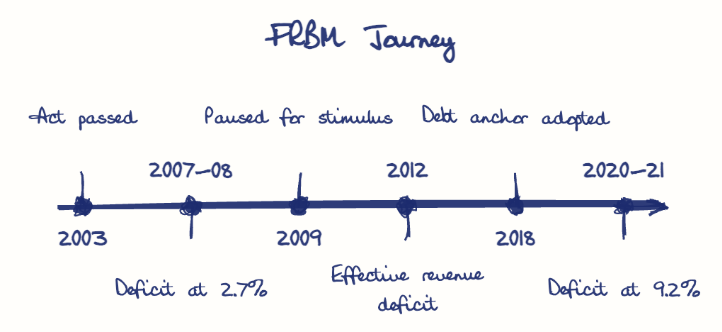
The FRBM Act, 2003 was introduced to end borrowing for consumption, curb the interest burden and stop monetisation, and it cut the Centre's deficits sharply before bending under later shocks. By 2007-08 the fiscal deficit had fallen to 2.7% of GDP.
Model answer
Ghissu Editorial · Verified 4 Oct 2026 · 283 words
Borrowing for consumption
Revenue deficits breached the golden rule that borrowing should create assets.
Interest burden
Interest absorbed close to half of the Centre's revenue receipts by the early 2000s, crowding out development spending.
Crowding out and inflation
Government borrowing raised private credit costs, and monetisation through ad hoc treasury bills had fuelled inflation.
Targets
The fiscal deficit was to fall to 3% of GDP and the revenue deficit to zero by 2008, and by 2007-08 they stood at 2.7% and 1.1%.
Transparency
Three fiscal statements and quarterly reviews improved disclosure, though off-budget oil and fertiliser bonds escaped the count.
No RBI financing
From April 2006 the RBI stopped buying primary government securities, the most durable gain.
Slippage
The 2008 crisis stimulus pushed the deficit above 6% in 2009-10, and the 2012 amendment diluted the path.
This model answer is indicative and the model can make mistakes; please verify key facts independently.
Practise this question
1Get the answer sheet
Sized for this question.
2Write your answer
Timed, by hand.
3Get it marked
Your score and what to fix.
This chapter in the exam
Fiscal Deficit & Management1 question
Asked in 1 of 14 sittings since 2013
Question from the official UPSC Civil Services (Main) Examination 2013 paper. Answer written by Ghissu's engine and checked against our editorial standards. Found an error? Tell us and we correct it within 48 hours.