2013 · GS Paper 4 · Q3 · 10 marks
Some people feel that values keep changing with time and situation, while others strongly believe that there are certain universal and eternal human values. Give your perception in this regard with due justification.
In short
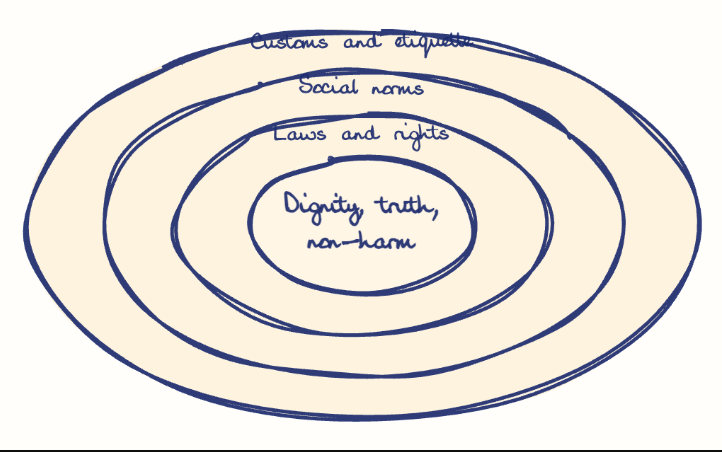
Values have an eternal core and a changing shell: dignity, truth, justice and non-harm endure, while customs, norms and laws change as society widens whom those values protect. Reforms such as the 1829 Sati Regulation and Navtej Singh Johar (2018) applied old values more honestly rather than discarding them.
Model answer
Ghissu Editorial · Verified 4 Oct 2026 · 275 words
Social reform
Practices once defended as tradition were rejected, from the Bengal Sati Regulation of 1829 to the abolition of untouchability under Article 17.
Expanding rights
Navtej Singh Johar (2018) decriminalised consensual same-sex relations and Joseph Shine (2018) struck down the adultery offence, so the meaning of dignity widens with time.
Situational ethics
The Mahabharata's apaddharma permits conduct in distress that is barred in normal times, unlike Kant's rigid duty.
Shared moral core
The Golden Rule appears in the Mahabharata, Confucius's Analects and the Bible, so reciprocity is human, not regional.
Rights across cultures
The Universal Declaration of Human Rights (1948) drew on many traditions, and Hansa Mehta changed "all men" to "all human beings".
Not merely Western
Amartya Sen traced tolerance and freedom to Ashoka's edicts and Akbar's court, refuting the claim that human rights are alien to Asia.
This model answer is indicative and the model can make mistakes; please verify key facts independently.
Practise this question
1Get the answer sheet
Sized for this question.
2Write your answer
Timed, by hand.
3Get it marked
Your score and what to fix.
This chapter in the exam
Essence, determinants and consequences of Ethics in human actions12 questions
Asked in 9 of 14 sittings since 2013
- 2026Shakespeare in Henry IV says, "The arms are fair when the intent of bearing them is just". What ethical implications does this have in governance?
- 2024"The concept of Just and Unjust is contextual. What was just a year back, may turn out to be unjust in today's context. Changing context should be constantly under scrutiny to prevent miscarriage of justice." Examine the above statement with suitable examples.
All 12 questions, sorted by sub-topic, with model answers and practice.
Question from the official UPSC Civil Services (Main) Examination 2013 paper. Answer written by Ghissu's engine and checked against our editorial standards. Found an error? Tell us and we correct it within 48 hours.