2014 · GS Paper 1 · Q14 · 10 marks
Discuss the various economic and socio-cultural forces that are driving increasing feminization of agriculture in India.
In short
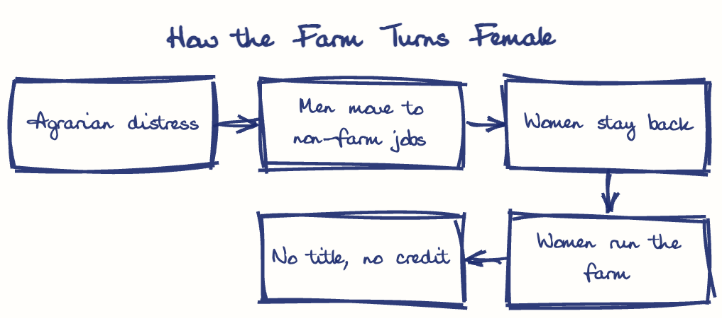
Agrarian distress, tiny holdings and male outmigration push women onto farms, while restricted mobility, patriarchal division of labour and caste norms keep them there as unpaid or low-paid labour. Women do most farm work yet held only about 14% of operational holdings in the Agricultural Census 2015-16.
Model answer
Ghissu Editorial · Verified 4 Oct 2026 · 274 words
Distress and tiny holdings
With the average holding near 1.08 hectares and returns falling, farming cannot support a family, so men seek cash wages elsewhere.
Male outmigration
Men from Uttarakhand's hills and the migrant belts of Bihar and eastern Uttar Pradesh move to construction and urban work, leaving women as de facto farm managers.
Distress-driven participation
The rise in rural female labour force participation since 2017-18 (PLFS) is mostly unpaid family help, not better jobs.
Restricted mobility
Purdah norms, safety fears and care duties stop women migrating, so they stay with land, children and elders.
Patriarchal division of labour
Farm work is treated as an extension of housework, so it is counted as "help" and stays unpaid and invisible.
Caste and class
Status-seeking families withdraw women from fields, as Srinivas's Sanskritisation predicts, so Dalit, Adivasi and landless women carry the load.
This model answer is indicative and the model can make mistakes; please verify key facts independently.
Practise this question
1Get the answer sheet
Sized for this question.
2Write your answer
Timed, by hand.
3Get it marked
Your score and what to fix.
This chapter in the exam
Role of women and women's organization13 questions
Asked in 8 of 14 sittings since 2013
- 2024Distinguish between gender equality, gender equity and women's empowerment. Why is it important to take gender concerns into account in programme design and implementation?
- 2024Globalization has increased urban migration by skilled, young, unmarried women from various classes. How has this trend impacted upon their personal freedom and relationship with family?
All 13 questions, sorted by sub-topic, with model answers and practice.
Question from the official UPSC Civil Services (Main) Examination 2014 paper. Answer written by Ghissu's engine and checked against our editorial standards. Found an error? Tell us and we correct it within 48 hours.