2014 · GS Paper 3 · Q8 · 12 marks
National Urban Transport Policy emphasises on 'moving people' instead of 'moving vehicles'. Discuss critically the success of the various strategies of the Government in this regard.
In short
The government's strategies under the 2006 National Urban Transport Policy have partly succeeded, expanding metros, regional rail and e-buses while bus fleets, walking and unified planning lag. Metro lines grew from 248 km in 2014 to 1,095 km in 2025, yet Bengaluru commuters lost 117 rush-hour hours in 2024.
Model answer
Ghissu Editorial · Verified 4 Oct 2026 · 276 words
Metro expansion
The metro network grew from 248 km in 2014 to 1,095 km in 2025 across 26 cities (PIB, 2026), with Delhi Metro now the backbone of the capital's commuting.
Regional rail and buses
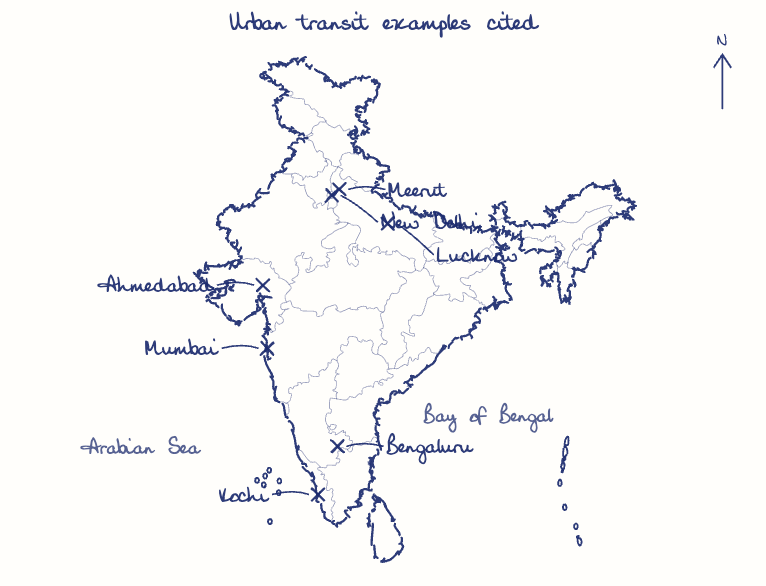
Namo Bharat RRTS runs on the Delhi-Meerut corridor since 2023, and PM e-Bus Sewa (2023) targets 10,000 e-buses in 169 cities.
Integration tools
Ahmedabad's Janmarg BRTS, the 2017 Metro Rail and Transit-Oriented Development policies and the National Common Mobility Card link modes and land use.
Vehicles still win
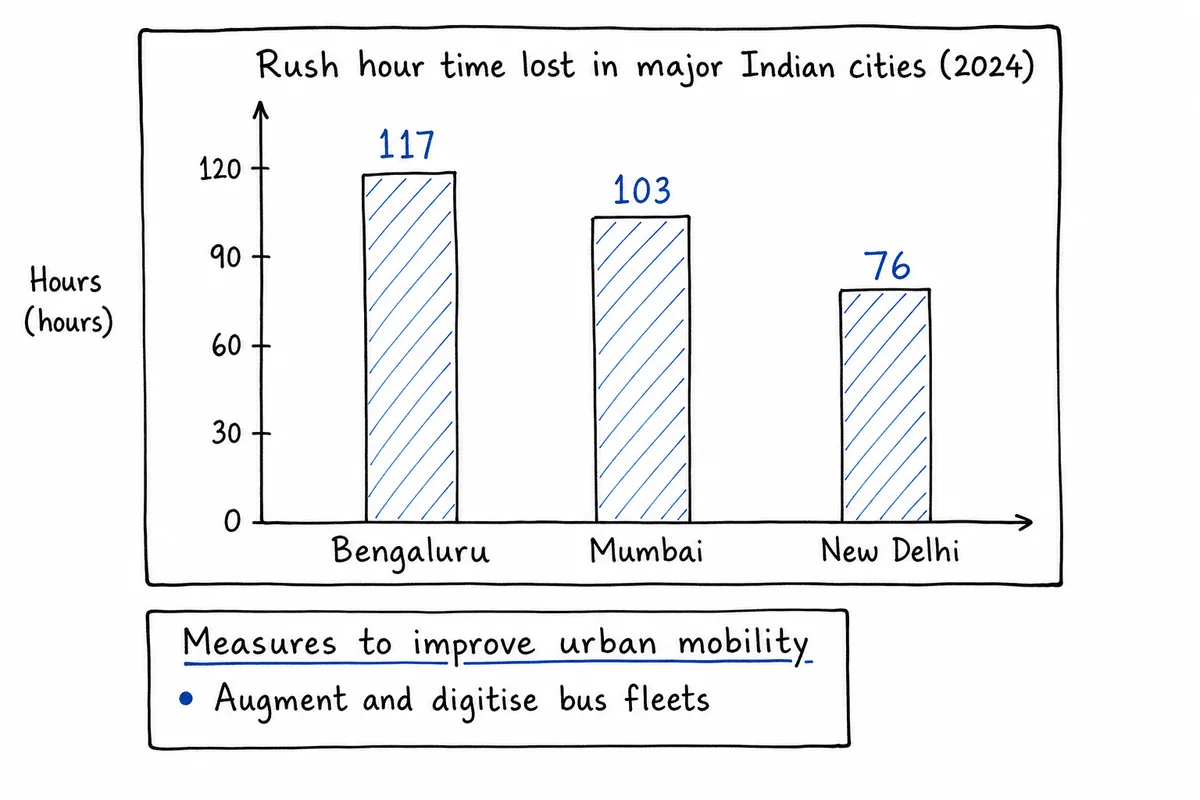
Bengaluru commuters lost 117 hours and Mumbai 103 in 2024, as private vehicles outpaced bus fleets that most cities never expanded.
Under-used metros
Kochi and Lucknow metros carry far fewer riders than projected because feeder links are weak.
Governance gaps
Unified Metropolitan Transport Authorities, mandated by the 2017 metro policy, work in only a few cities such as Kochi, and Delhi dismantled its BRT corridor in 2016.
Walking neglected
Pedestrians were about a fifth of road deaths in 2022 (MoRTH), as footpaths and safe crossings remain an afterthought.
This model answer is indicative and the model can make mistakes; please verify key facts independently.
Practise this question
1Get the answer sheet
Sized for this question.
2Write your answer
Timed, by hand.
3Get it marked
Your score and what to fix.
This chapter in the exam
Infrastructure (etc.)4 questions
Asked in 4 of 14 sittings since 2013
- 2023What is the status of digitalization in the Indian economy? Examine the problems faced in this regard and suggest improvements.
- 2021"Investment in infrastructure is essential for more rapid and inclusive economic growth." Discuss in the light of India's experience.
All 4 questions, sorted by sub-topic, with model answers and practice.
Question from the official UPSC Civil Services (Main) Examination 2014 paper. Answer written by Ghissu's engine and checked against our editorial standards. Found an error? Tell us and we correct it within 48 hours.