2014 · GS Paper 3 · Q10 · 12 marks
Scientific research in Indian universities is declining, because a career in science is not as attractive as are business professions, engineering or administration, and the universities are becoming consumer-oriented. Critically comment.
In short
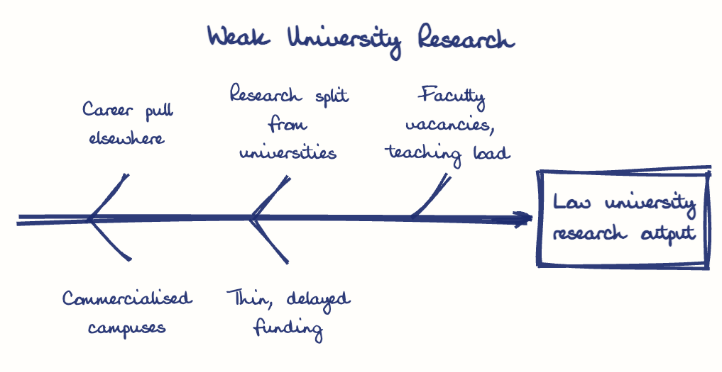
University research is weakened by the pull of better-paid careers and commercialised campuses, but the deeper causes are structural: research was separated into CSIR, DAE and ISRO laboratories and funding is thin and delayed. Universities performed only 8.8 per cent of India's R&D spending in 2020-21.
Model answer
Ghissu Editorial · Verified 4 Oct 2026 · 291 words
Career pull
Engineering, IT, management and the civil services offer early pay and status; a JRF stipend, even after its 2023 revision to Rs 37,000 a month, trails private salaries.
Insecure research path
Long PhD and postdoctoral contracts push many of the best abroad, a long-running brain drain.
Consumer-oriented campuses
Self-financing courses and placement-driven rankings treat students as customers and crowd out curiosity-driven research.
Structural separation
Since independence top research went to CSIR, DAE and ISRO laboratories, so state universities were never built as research hubs.
Funding delivery
CAG Report No. 17 of 2026 found 48.15 per cent of DST's 2023-24 provision unspent, while vacancies and teaching loads squeeze research time.
Not uniform decline
India awarded 40,813 doctorates in 2018-19, 60 per cent in science and technology (NSF), and IISc, the IITs and IISERs produce world-class work.
Reform under way
The ANRF Act, 2023, the Prime Minister's Research Fellowship and the Rs 1 lakh crore RDI Scheme (2025) address the funding gaps.
This model answer is indicative and the model can make mistakes; please verify key facts independently.
Practise this question
1Get the answer sheet
Sized for this question.
2Write your answer
Timed, by hand.
3Get it marked
Your score and what to fix.
This chapter in the exam
Indigenization of Technology and Developing New Technology1 question
Asked in 1 of 14 sittings since 2013
Question from the official UPSC Civil Services (Main) Examination 2014 paper. Answer written by Ghissu's engine and checked against our editorial standards. Found an error? Tell us and we correct it within 48 hours.