2014 · GS Paper 4 · Q1(a) · 10 marks
All human beings aspire for happiness. Do you agree? What does happiness mean to you? Explain with examples.
In short
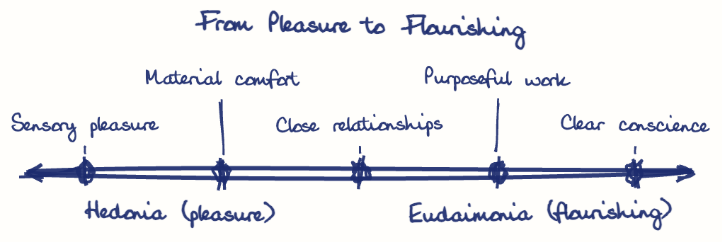
All humans aspire for happiness, though some forgo pleasure for duty or meaning, which shows that true happiness is flourishing rather than comfort. Aristotle's eudaimonia, seen in Baba Amte's service at Anandwan, captures happiness as contentment, purpose and integrity.
Model answer
Ghissu Editorial · Verified 4 Oct 2026 · 281 words
Universal pursuit
Bentham saw mankind ruled by two masters, pain and pleasure, and the UN declared 20 March the International Day of Happiness in 2012; Bhutan even measures progress by Gross National Happiness.
Duty over happiness
Kant held that morality teaches how to become worthy of happiness, not how to be happy; Bhagat Singh chose the gallows over comfort.
Meaning first
Viktor Frankl's "Man's Search for Meaning" (1946) argued that people seek meaning, and happiness follows as a by-product.
Contentment
To me, happiness is inner peace free of endless craving, the santosha of Patanjali's niyamas.
Purposeful service
Baba Amte found joy building Anandwan for people with leprosy, as an officer does when a drought-hit village gets drinking water.
Integrity
Happiness also means a clear conscience and an even mind, like the Gita's sthitaprajna, steady in success and failure.
Shared joy
It grows when shared with family and community, which is why loneliness erodes it even amid wealth.
This model answer is indicative and the model can make mistakes; please verify key facts independently.
Practise this question
1Get the answer sheet
Sized for this question.
2Write your answer
Timed, by hand.
3Get it marked
Your score and what to fix.
This chapter in the exam
Essence, determinants and consequences of Ethics in human actions12 questions
Asked in 9 of 14 sittings since 2013
- 2026Shakespeare in Henry IV says, "The arms are fair when the intent of bearing them is just". What ethical implications does this have in governance?
- 2024"The concept of Just and Unjust is contextual. What was just a year back, may turn out to be unjust in today's context. Changing context should be constantly under scrutiny to prevent miscarriage of justice." Examine the above statement with suitable examples.
All 12 questions, sorted by sub-topic, with model answers and practice.
Question from the official UPSC Civil Services (Main) Examination 2014 paper. Answer written by Ghissu's engine and checked against our editorial standards. Found an error? Tell us and we correct it within 48 hours.