2015 · GS Paper 3 · Q20 · 12 marks
Considering the threats cyberspace poses for the country, India needs a "Digital Armed Force" to prevent crimes. Critically evaluate the National Cyber Security Policy, 2013 outlining the challenges perceived in its effective implementation.
In short
The National Cyber Security Policy 2013 set the right vision and institutions but lacked timelines, funding, coordination and an offensive military arm, so it delivered weakly. Its target of 5 lakh cyber professionals was missed, and its 2020 successor strategy is still pending.
Model answer
Ghissu Editorial · Verified 4 Oct 2026 · 273 words
Comprehensive vision
It covered citizens, businesses and government as one cyber ecosystem instead of leaving security to individual departments.
Institutional design
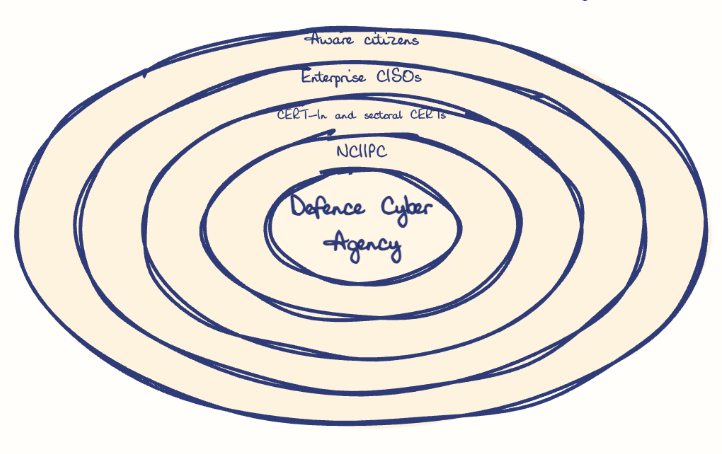
It led to the NCIIPC, notified under section 70A of the IT Act in 2014, beside CERT-In as the nodal incident responder.
Human capital and accountability
It targeted 5 lakh cyber professionals in five years and asked organisations to appoint a Chief Information Security Officer.
No roadmap or funds
It had no timelines, budget or review, and the 2020 draft National Cyber Security Strategy is still pending.
Fragmented ownership
CERT-In under MeitY, NCIIPC under the NTRO and the Home Ministry's I4C work in silos without a statutory coordinator.
Skill and import gaps
The 5 lakh target was missed and imported hardware and software leave supply-chain risks open.
No Digital Armed Force
The tri-service Defence Cyber Agency came only in 2019 and is not yet a full cyber command.
This model answer is indicative and the model can make mistakes; please verify key facts independently.
Practise this question
1Get the answer sheet
Sized for this question.
2Write your answer
Timed, by hand.
3Get it marked
Your score and what to fix.
This chapter in the exam
Cyber Security9 questions
Asked in 9 of 14 sittings since 2013
- 2024Describe the context and salient features of the Digital Personal Data Protection Act, 2023.
- 2022What are the different elements of cyber security ? Keeping in view the challenges in cyber security, examine the extent to which India has successfully developed a comprehensive National Cyber Security Strategy.
All 9 questions, sorted by sub-topic, with model answers and practice.
Question from the official UPSC Civil Services (Main) Examination 2015 paper. Answer written by Ghissu's engine and checked against our editorial standards. Found an error? Tell us and we correct it within 48 hours.