2015 · GS Paper 3 · Q17 · 12 marks
Human rights activists constantly highlight the view that the Armed Forces (Special Powers) Act, 1958 (AFSPA) is a draconian act leading to cases of human rights abuses by the security forces. What sections of AFSPA are opposed by the activists? Critically evaluate the requirement with reference to the view held by the Apex Court.
In short
Activists oppose AFSPA Sections 3, 4 and 6 for open-ended disturbed-area declarations, lethal force, warrantless arrest and the sanction bar, yet the Supreme Court upheld the Act while denying it impunity. Naga People's Movement (1997) imposed limits; the EEVFAM case (2016) barred excessive force even in disturbed areas.
Model answer
Ghissu Editorial · Verified 4 Oct 2026 · 307 words
Section 3, disturbed areas
The Governor or Centre declares an area "disturbed" on its own opinion, with no statutory time limit, so declarations ran for decades in Nagaland and Manipur.
Section 4, force, arrest and search
Even a non-commissioned officer may use force "even to the causing of death" against those defying a ban on assemblies, and troops may arrest and search without warrant.
Section 6, sanction to prosecute
Prosecution needs the Centre's prior sanction, rarely given, so the Thangjam Manorama killing (2004) never reached a criminal trial.
Upheld with limits
In Naga People's Movement of Human Rights (1997) a Constitution Bench upheld the Act but required six-monthly review of declarations, minimum force and binding Army Dos and Don'ts.
No absolute immunity
In the Extra Judicial Execution Victim Families Association case (2016) the Court held excessive force barred even in disturbed areas and later ordered a CBI probe into Manipur encounters.
A shrinking need
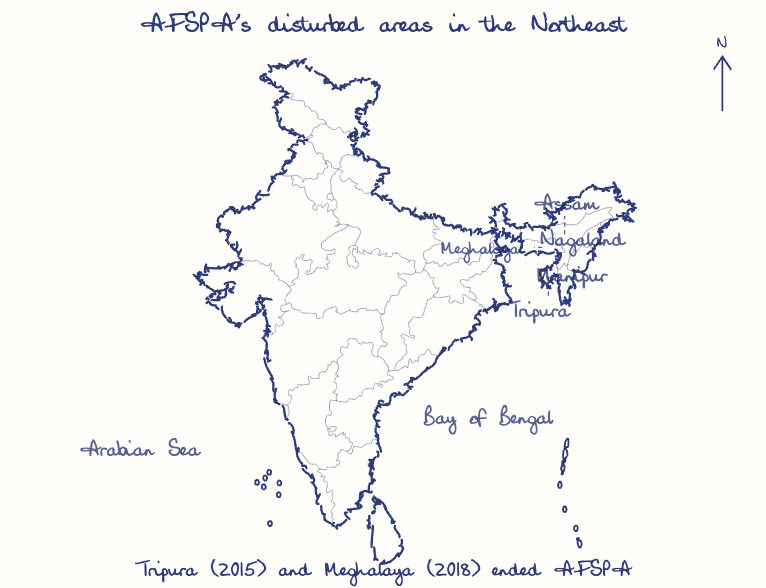
Tripura (2015) and Meghalaya (2018) ended AFSPA, and large parts of Assam, Nagaland and Manipur were de-notified from April 2022 after the Oting killings.
This model answer is indicative and the model can make mistakes; please verify key facts independently.
Practise this question
1Get the answer sheet
Sized for this question.
2Write your answer
Timed, by hand.
3Get it marked
Your score and what to fix.
This chapter in the exam
Security Forces and Agencies1 question
Asked in 1 of 14 sittings since 2013
Question from the official UPSC Civil Services (Main) Examination 2015 paper. Answer written by Ghissu's engine and checked against our editorial standards. Found an error? Tell us and we correct it within 48 hours.