2015 · GS Paper 3 · Q2 · 12 marks
Livestock rearing has a big potential for providing non-farm employment and income in rural areas. Discuss suggesting suitable measures to promote this sector in India.
In short
Livestock rearing offers inclusive rural income and off-farm jobs because animals are widely held by small and landless households and the sector outgrows crops. It contributed 30.87% of agricultural GVA in 2023-24, and better breeds, animal health, credit and markets can unlock it.
Model answer
Ghissu Editorial · Verified 4 Oct 2026 · 260 words
Fastest growth
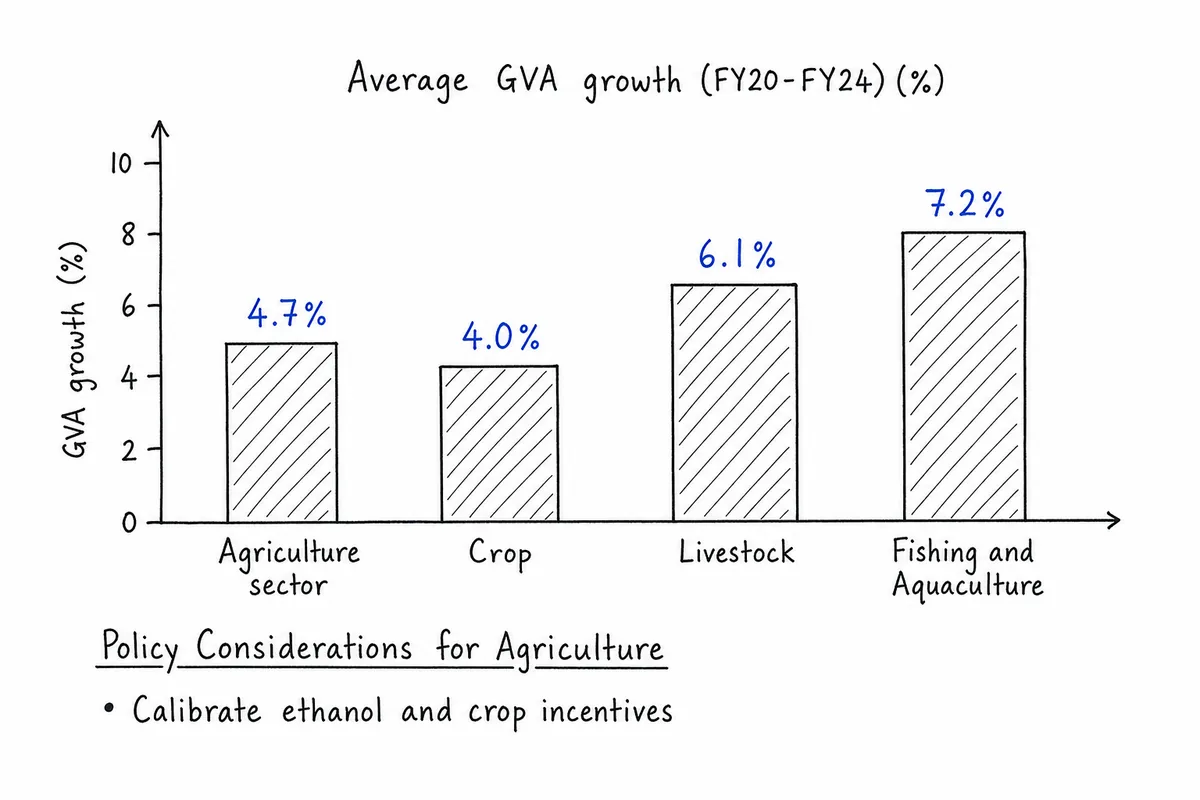
Livestock and fisheries outgrew crops in FY20-FY24 (Economic Survey 2025-26), so diversifying into animals taps the farm economy's most dynamic part.
Income smoothing
Milk brings daily cash and animals serve as a "living bank" sold in distress when a monsoon fails.
Women and landless
Women-owned producer companies such as Shreeja Mahila Milk Producer Company in Andhra Pradesh convert women's animal care into income.
Value chain jobs
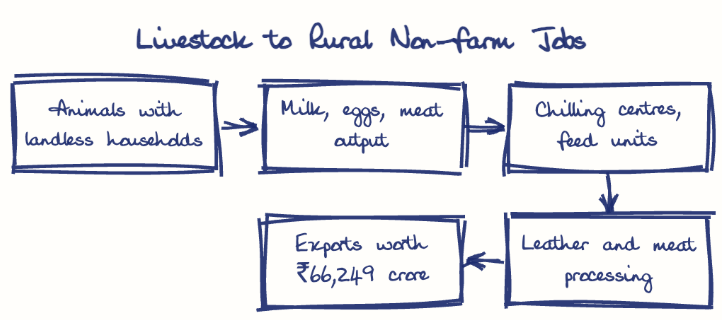
Chilling, feed, veterinary and processing work create off-farm jobs; livestock product exports reached ₹66,249 crore in 2024-25.
Better breeds
Scale Rashtriya Gokul Mission's sex-sorted semen and IVF for indigenous breeds like Gir and Sahiwal.
Animal health
Universalise NADCP vaccination against foot-and-mouth disease and the 1962 mobile veterinary units.
Credit and infrastructure
Use KCC for animal husbandry and the Animal Husbandry Infrastructure Development Fund for village chilling and feed units.
Markets and fodder
Pair National Livestock Mission fodder support with cooperatives, FPOs and A-HELP extension agents for assured procurement.
This model answer is indicative and the model can make mistakes; please verify key facts independently.
Practise this question
1Get the answer sheet
Sized for this question.
2Write your answer
Timed, by hand.
3Get it marked
Your score and what to fix.
This chapter in the exam
Economics of Animal-rearing2 questions
Asked in 2 of 14 sittings since 2013
Question from the official UPSC Civil Services (Main) Examination 2015 paper. Answer written by Ghissu's engine and checked against our editorial standards. Found an error? Tell us and we correct it within 48 hours.