2015 · GS Paper 3 · Q19 · 12 marks
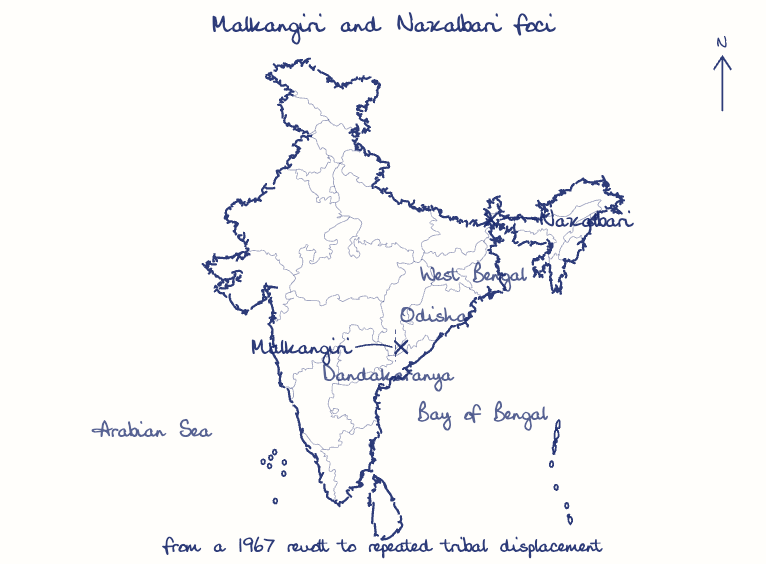
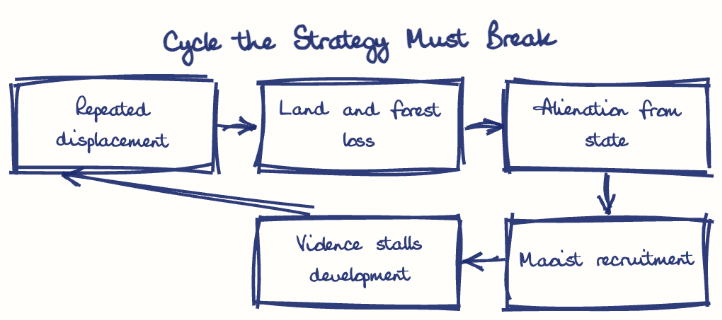
The persisting drives of the Government for development of large industries in backward areas have resulted in isolating the tribal population and the farmers who face multiple displacements. With Malkangiri and Naxalbari foci, discuss the corrective strategies needed to win the Left Wing Extremism (LWE) doctrine affected citizens back into the mainstream of social and economic growth.
In short
Winning LWE-affected citizens back needs consent-based acquisition, secure land and forest rights, shared resource wealth and a trusted state presence. In Naxalbari's own state, Operation Barga (1978) secured sharecroppers' rights, while the Gurupriya bridge (2018) opened Malkangiri's 151 cut-off villages.
Model answer
Ghissu Editorial · Verified 4 Oct 2026 · 280 words
Consent before acquisition
The RFCTLARR Act, 2013 requires a social impact assessment and gram sabha consent in Scheduled Areas, and the Niyamgiri judgment (2013) upheld the gram sabha's say over mining.
Secure tenure
In Naxalbari's own state, Operation Barga (1978) recorded sharecroppers' rights and drained the movement's rural appeal; Forest Rights Act titles and PESA gram sabhas can do the same for tribals.
Sharing resource wealth
District Mineral Foundations (2015) and the ROSHNI skilling scheme turn industry into jobs for the displaced.
Connecting cut-off pockets
The Gurupriya bridge (2018) joined Malkangiri's 151 cut-off villages, now Swabhiman Anchal, to roads, schools and mobile towers.
Rights-respecting security
The Supreme Court's Salwa Judum ruling in Nandini Sundar (2011) shows that excesses push villagers towards the Maoists.
Surrender and delivery
Odisha's surrender and rehabilitation package and the Aspirational Districts Programme (2018), which covers Malkangiri, carry the state to the last hamlet.
This model answer is indicative and the model can make mistakes; please verify key facts independently.
Practise this question
1Get the answer sheet
Sized for this question.
2Write your answer
Timed, by hand.
3Get it marked
Your score and what to fix.
This chapter in the exam
Development2 questions
Asked in 2 of 14 sittings since 2013
Question from the official UPSC Civil Services (Main) Examination 2015 paper. Answer written by Ghissu's engine and checked against our editorial standards. Found an error? Tell us and we correct it within 48 hours.