2015 · GS Paper 3 · Q12 · 12 marks
What are the areas of prohibitive labour that can be sustainably managed by robots ? Discuss the initiatives that can propel research in premier research institutes for substantive and gainful innovation.
In short
Robots can sustainably take over sewer cleaning, mining, nuclear and chemical work, bomb disposal, disaster rescue and space or deep-sea tasks. Mission funding such as IMPRINT and the ANRF, research fellowships and robotics hubs like ARTPARK at IISc can turn institute research into deployable machines.
Model answer
Ghissu Editorial · Verified 4 Oct 2026 · 273 words
Sewers and septic tanks
Genrobotics' Bandicoot, deployed in Thiruvananthapuram in 2018, cleans manholes while former manual scavengers are retrained as its operators.
Mines, nuclear and chemical sites
Remote machines can work in deep seams, radioactive zones and toxic plants, as robots did in Fukushima after 2011.
Defence and disasters
DRDO's Daksh defuses explosives, and rescue robots can search collapsed buildings ahead of NDRF teams.
Extreme frontiers
ISRO's humanoid Vyommitra will fly on uncrewed Gaganyaan missions, and NIOT's ROSUB 6000 works at depths no diver can reach.
Mission-mode funding
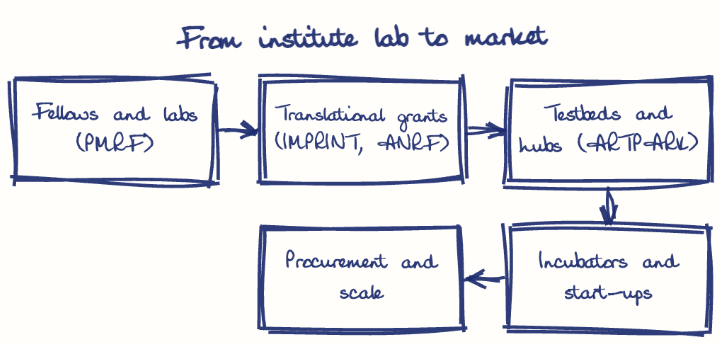
IMPRINT (2015) funds IIT and IISc solutions to national engineering challenges, and the ANRF Act, 2023 plans Rs 50,000 crore over five years.
Talent
The Prime Minister's Research Fellowship (2018) keeps top graduates in Indian doctoral labs instead of losing them to universities abroad.
Robotics hubs and markets
ARTPARK at IISc and the IIT Delhi cobotics hub provide testbeds, while research parks, incubators and public procurement carry robots to market.
This model answer is indicative and the model can make mistakes; please verify key facts independently.
Practise this question
1Get the answer sheet
Sized for this question.
2Write your answer
Timed, by hand.
3Get it marked
Your score and what to fix.
This chapter in the exam
Robotics1 question
Asked in 1 of 14 sittings since 2013
Question from the official UPSC Civil Services (Main) Examination 2015 paper. Answer written by Ghissu's engine and checked against our editorial standards. Found an error? Tell us and we correct it within 48 hours.