2016 · GS Paper 3 · Q20 · 12 marks
Use of Internet and social media by non-state actors for subversive activities is a major security concern. How have these been misused in the recent past? Suggest effective guidelines to curb the above threat.
In short
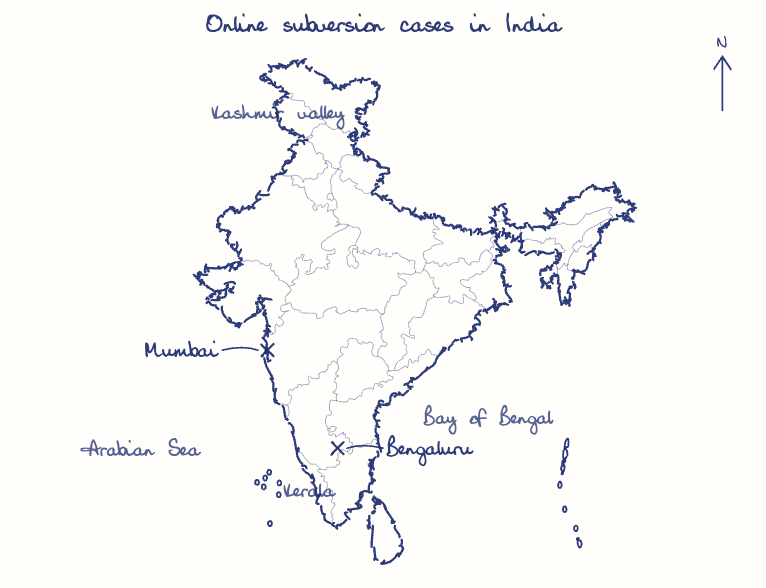
Non-state actors have misused the internet and social media for ISIS recruitment, glorifying militancy in Kashmir, spreading communal rumours and directing terror attacks in real time. Section 69A blocking under the Shreya Singhal safeguards, state monitoring cells, counter-narratives and global cooperation can curb the threat.
Model answer
Ghissu Editorial · Verified 4 Oct 2026 · 264 words
ISIS recruitment
Youths from Kalyan (2014) and about 21 people, mostly from Kerala's Kasaragod (2016), left to join ISIS after online contact with handlers.
Glorifying militancy
Burhan Wani's Facebook videos drew Kashmiri youth into militancy, and after his killing in July 2016 social media mobilised street violence.
Rumours and panic
Morphed images triggered the 2012 exodus of North-East people from Bengaluru, and a fake video fuelled the Muzaffarnagar riots of 2013.
Terror operations
The 26/11 attackers' handlers guided them through VoIP calls in real time, and the group had used Google Earth imagery for reconnaissance.
Legal clarity
Blocking under Section 69A should follow the reasoned procedure upheld in Shreya Singhal (2015), with defined platform duties.
Monitoring cells
Every state needs a cell like the Mumbai Police Social Media Lab (2013), linked to central agencies for quick takedowns.
Counter-narratives
Community voices and de-radicalisation programmes like Maharashtra's can reach vulnerable youth first.
Global cooperation
Mutual Legal Assistance Treaties and hash-sharing with platforms can deny extremists safe havens abroad.
This model answer is indicative and the model can make mistakes; please verify key facts independently.
Practise this question
1Get the answer sheet
Sized for this question.
2Write your answer
Timed, by hand.
3Get it marked
Your score and what to fix.
This chapter in the exam
Social Networking Sites4 questions
Asked in 4 of 14 sittings since 2013
- 2026Explain how fake news and disinformation pose threat to Internal Security and Public Order in Indian context? In this regard, discuss salient features of amendments in respect of Information Technology (Intermediatory Guidelines and Digital Media Ethics Code) Rules 2021. (Answer in 150 words)
- 2024Social media and encrypting messaging services pose a serious security challenge. What measures have been adopted at various levels to address the security implications of social media? Also suggest any other remedies to address the problem.
All 4 questions, sorted by sub-topic, with model answers and practice.
Question from the official UPSC Civil Services (Main) Examination 2016 paper. Answer written by Ghissu's engine and checked against our editorial standards. Found an error? Tell us and we correct it within 48 hours.