2018 · GS Paper 1 · Q18 · 15 marks
Women's movement in India has not addressed the issues of women of lower social strata.' Substantiate your view.
In short
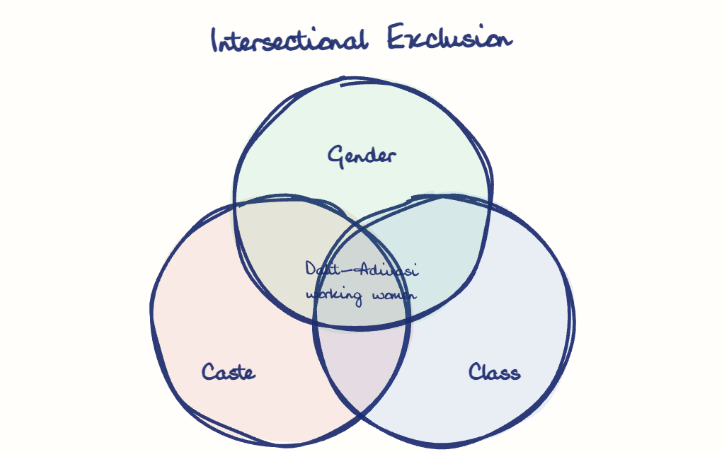
The mainstream Indian women's movement, led by urban upper-caste women, largely ignored caste and class, leaving issues such as caste violence and manual scavenging to Dalit groups. The National Federation of Dalit Women was formed in 1995 because Dalit women felt unheard within it.
Model answer
Ghissu Editorial · Verified 4 Oct 2026 · 270 words
Elite reform agenda
Campaigns on sati, widow remarriage and the age of consent addressed upper-caste customs, and the AIWC (1927) was led by urban, educated women.
Caste blindness
The autonomous movement after 1975 fought dowry and custodial rape, yet left caste violence such as Khairlanji (2006), devadasi dedication and manual scavenging to Dalit groups; Uma Chakravarti called this structure Brahmanical patriarchy.
Representation gap
Mainstream groups resisted an OBC sub-quota, and the 106th Amendment (2023) gives OBC women none.
Anti-caste roots
The Phules opened a girls' school in Pune in 1848, and Ambedkar addressed depressed-class women at Nagpur in 1942.
Grassroots action
SEWA (1972) organised informal workers, and poor rural women of Dubagunta in Nellore began Andhra's anti-arrack agitation of 1992.
Law from the margins
The Mathura case led to the 1983 rape-law amendment, and Bhanwari Devi's case produced the Vishaka guidelines (1997).
Intersectional charter
Put caste atrocities, sanitation work and land titles on the core agenda, with Dalit and Adivasi women in leadership and NFHS data read by caste.
This model answer is indicative and the model can make mistakes; please verify key facts independently.
Practise this question
1Get the answer sheet
Sized for this question.
2Write your answer
Timed, by hand.
3Get it marked
Your score and what to fix.
This chapter in the exam
Role of women and women's organization13 questions
Asked in 8 of 14 sittings since 2013
- 2024Distinguish between gender equality, gender equity and women's empowerment. Why is it important to take gender concerns into account in programme design and implementation?
- 2024Globalization has increased urban migration by skilled, young, unmarried women from various classes. How has this trend impacted upon their personal freedom and relationship with family?
All 13 questions, sorted by sub-topic, with model answers and practice.
Question from the official UPSC Civil Services (Main) Examination 2018 paper. Answer written by Ghissu's engine and checked against our editorial standards. Found an error? Tell us and we correct it within 48 hours.