2018 · GS Paper 2 · Q20 · 15 marks
In what ways would the ongoing US-Iran Nuclear Pact Controversy affect the national interest of India? How should India respond to this situation?
In short
The US-Iran nuclear dispute hurts India's energy security, Chabahar and INSTC connectivity, strategic autonomy and Gulf diaspora, so India should follow only UN sanctions, negotiate waivers and diversify. India lost a top-three crude supplier once the US waiver lapsed in May 2019.
Model answer
Ghissu Editorial · Verified 4 Oct 2026 · 278 words
Energy security
Iran, a top-three supplier in 2017-18 offering credit and freight discounts, was lost after the US waiver lapsed in May 2019.
Connectivity
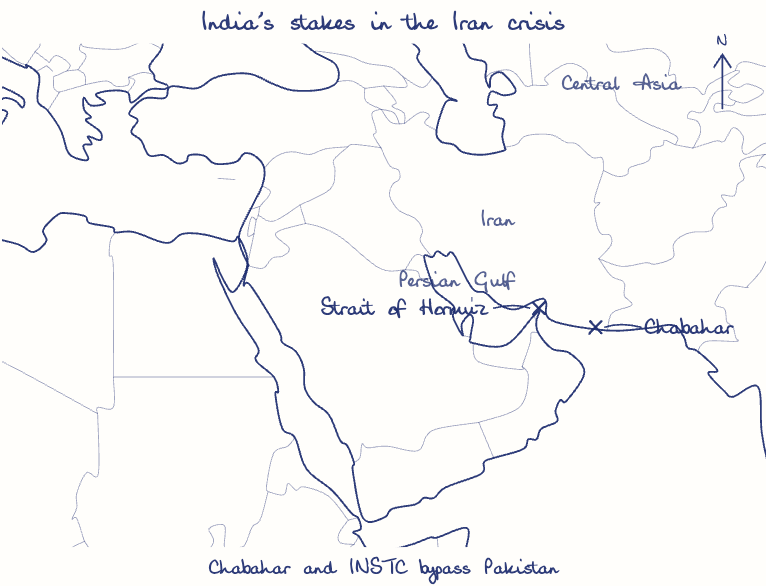
Chabahar and the INSTC, India's route to Afghanistan and Central Asia, slowed as suppliers and banks shied away despite a US exemption.
Strategic squeeze
CAATSA pressure hung over the S-400 deal, while China gained ground through its 2021 pact with Iran.
Diaspora risk
Escalation threatens around nine million Indians in the Gulf, as Operation Sindhu (2025) showed.
Principled autonomy
Follow only UN sanctions and back dialogue through the IAEA, opposing a nuclear-armed Iran without endorsing unilateral pressure.
Negotiated carve-outs
Use the 2+2 dialogue to win waivers, as with the Chabahar exemption.
Energy hedging
Diversify crude sources and fill the 5.33 million tonne Strategic Petroleum Reserve.
Parallel routes
Keep Chabahar alive under the 2024 agreement and advance IMEC so no single route can be sanctioned shut.
Crisis readiness
Keep naval escorts on the model of Operation Sankalp (2019) and standing evacuation plans.
This model answer is indicative and the model can make mistakes; please verify key facts independently.
Practise this question
1Get the answer sheet
Sized for this question.
2Write your answer
Timed, by hand.
3Get it marked
Your score and what to fix.
This chapter in the exam
Policies of Developed Countries1 question
Asked in 1 of 14 sittings since 2013
Question from the official UPSC Civil Services (Main) Examination 2018 paper. Answer written by Ghissu's engine and checked against our editorial standards. Found an error? Tell us and we correct it within 48 hours.