2018 · GS Paper 2 · Q16 · 15 marks
Multiplicity of various commissions for the vulnerable sections of the society leads to problems of overlapping jurisdiction and duplication of functions. Is it better to merge all commissions into an umbrella Human Rights Commission? Argue your case.
In short
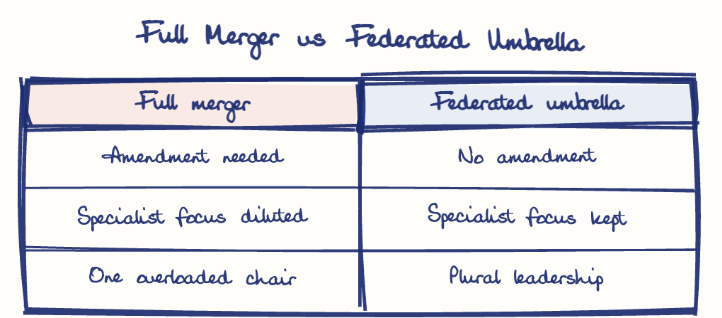
Merging all commissions into one Human Rights Commission is not the best answer: overlap is real, but a federated umbrella that keeps specialist mandates removes duplication without diluting protection. The NHRC already seats seven commission chairpersons as deemed members, a base for a statutory coordination council.
Model answer
Ghissu Editorial · Verified 4 Oct 2026 · 295 words
Overlapping jurisdiction
An atrocity on a Dalit woman can reach the NCSC, NCW, NHRC and a state commission at once, inviting forum shopping and parallel inquiries.
Shared weaknesses
Most commissions only recommend, and GANHRI deferred the NHRC's 'A' status in 2023 and 2024 over independence concerns.
Constitutional entrenchment
Merging the NCSC, NCST and NCBC needs a constitutional amendment, and Article 338(5) gives them a safeguard and planning role beyond rights violations.
Specialist duties
The NCPCR monitors the RTE and POCSO Acts and the Chief Commissioner enforces the RPwD Act, 2016; a generalist body would dilute this expertise.
Risk of concentration
One overloaded chairperson is easier to capture than a plural system.
Federated umbrella
Turn the NHRC's seven deemed-member chairpersons into a statutory coordination council, with one HRCNet complaint window and a first-seized rule.
Teeth and independence
Follow the Paris Principles and set time limits for governments to act on recommendations.
This model answer is indicative and the model can make mistakes; please verify key facts independently.
Practise this question
1Get the answer sheet
Sized for this question.
2Write your answer
Timed, by hand.
3Get it marked
Your score and what to fix.
This chapter in the exam
Mechanisms, Laws, Institutions and Bodies1 question
Asked in 1 of 14 sittings since 2013
Question from the official UPSC Civil Services (Main) Examination 2018 paper. Answer written by Ghissu's engine and checked against our editorial standards. Found an error? Tell us and we correct it within 48 hours.