2018 · GS Paper 3 · Q12 · 15 marks
How would the recent phenomena of protectionism and currency manipulations in world trade affect macroeconomic stability of India?
In short
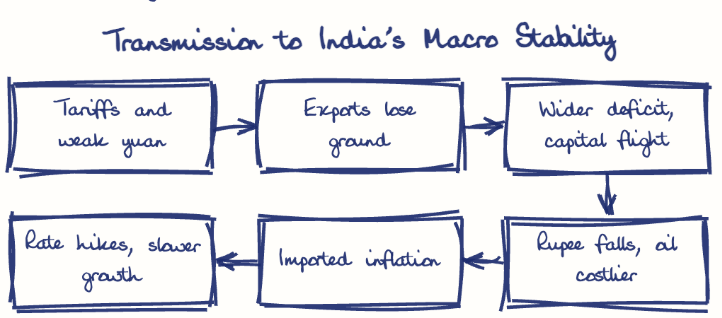
Protectionism and currency manipulation threaten India's macroeconomic stability by cutting exports, inviting dumping, widening the current account deficit and weakening the rupee, which feeds imported inflation. In 2018 the current account deficit widened to 2.1% of GDP and the rupee crossed 74 to the dollar.
Model answer
Ghissu Editorial · Verified 4 Oct 2026 · 284 words
Exports and growth
Tariff walls cut demand for Indian metals and labour-intensive goods, slowing manufacturing and jobs.
Dumping
Chinese steel diverted from the US floods India, forcing anti-dumping duties.
Wider deficit
Weak exports and costly oil widened the current account deficit to 2.1% of GDP in 2018-19, raising reliance on volatile capital inflows.
Weakened rules
Unilateral tariffs bypass the WTO, and the later withdrawal of India's GSP benefits (2019) showed bilateral pressure replacing rule-based remedies.
Lost competitiveness
An undervalued yuan cheapens Chinese goods, widening India's trade deficit with China.
Rupee volatility
Capital flight pushed the rupee past 74 to the dollar in October 2018, draining reserves.
Policy squeeze
Imported inflation led RBI to raise the repo rate twice in 2018 to 6.5%, trading growth for price stability.
Diversify and compete
New markets in ASEAN, Africa and West Asia, lower logistics costs and Make in India improve exports more durably than tariff hikes.
Buffers and rules
Adequate reserves, a flexible rupee and a restored WTO dispute system absorb shocks.
This model answer is indicative and the model can make mistakes; please verify key facts independently.
Practise this question
1Get the answer sheet
Sized for this question.
2Write your answer
Timed, by hand.
3Get it marked
Your score and what to fix.
This chapter in the exam
Liberalization9 questions
Asked in 6 of 14 sittings since 2013
- 2025What are the challenges before the Indian economy when the world is moving away from free trade and multilateralism to protectionism and bilateralism ? How can these challenges be met ?
- 2016How globalization has led to the reduction of employment in the formal sector of the Indian economy? Is increased informalization detrimental to the development of the country?
All 9 questions, sorted by sub-topic, with model answers and practice.
Question from the official UPSC Civil Services (Main) Examination 2018 paper. Answer written by Ghissu's engine and checked against our editorial standards. Found an error? Tell us and we correct it within 48 hours.