2018 · GS Paper 4 · Q1(a) · 10 marks
State the three basic values, universal in nature, in the context of civil services and bring out their importance.
In short
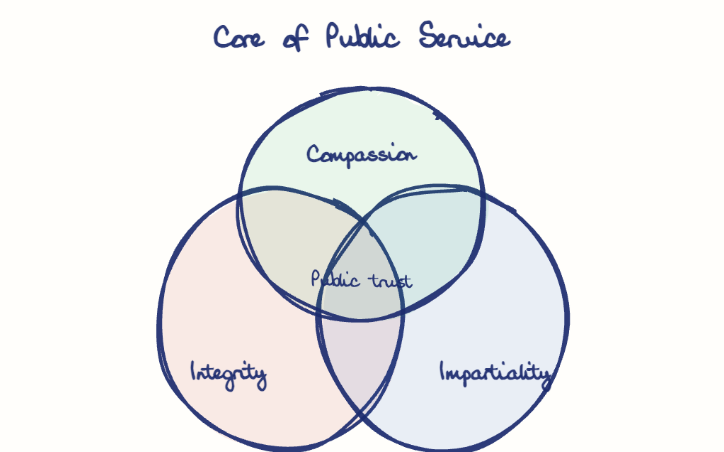
Integrity, impartiality and compassion are the three universal values of civil service because they make public power honest, fair and humane, and so earn citizens' trust. T.N. Seshan's equal enforcement of the Model Code of Conduct shows impartiality giving life to Article 14.
Model answer
Ghissu Editorial · Verified 4 Oct 2026 · 265 words
Integrity
Consistency between word and deed and honest use of power, seen in Tukaram Mundhe's anti-corruption record in Maharashtra despite repeated transfers.
Impartiality
Deciding on merit without fear or favour; T.N. Seshan applied the Model Code of Conduct equally to every party.
Compassion
Acting to relieve the suffering of the weakest; S.R. Sankaran enforced the Bonded Labour System (Abolition) Act, 1976 and set up schools for Dalit children.
Trust and legitimacy
Integrity makes citizens accept state decisions as honest, the basis of voluntary compliance.
Equality before law
Impartiality gives life to Article 14, so rich and poor meet the same rule at the same desk.
Inclusive delivery
Armstrong Pame's 100 km "People's Road" in Manipur, built with public donations in 2012, shows compassion turning neglect into access.
Mutual balance
Impartiality without compassion turns cold and compassion without integrity invites favouritism, so the three values check and complete one another.
This model answer is indicative and the model can make mistakes; please verify key facts independently.
Practise this question
1Get the answer sheet
Sized for this question.
2Write your answer
Timed, by hand.
3Get it marked
Your score and what to fix.
This chapter in the exam
Integrity5 questions
Asked in 5 of 14 sittings since 2013
- 2021"Integrity is a value that empowers the human being." Justify with suitable illustration.
- 2017One of the tests of integrity is complete refusal to be compromised. Explain with reference to a real life example.
All 5 questions, sorted by sub-topic, with model answers and practice.
Question from the official UPSC Civil Services (Main) Examination 2018 paper. Answer written by Ghissu's engine and checked against our editorial standards. Found an error? Tell us and we correct it within 48 hours.