2019 · GS Paper 1 · Q12 · 15 marks
Assess the role of British imperial power in complicating the process of transfer of power during the 1940s.
In short
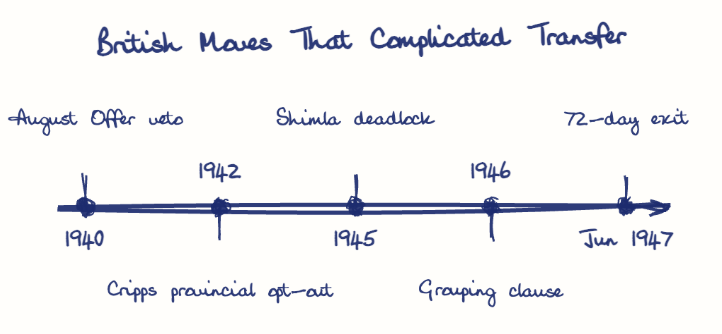
British imperial power complicated the transfer of power by giving the Muslim League a veto, keeping its plans ambiguous and leaving in haste, though Indian rivalries also mattered. The August Offer of 1940 promised no constitution without the consent of minorities.
Model answer
Ghissu Editorial · Verified 4 Oct 2026 · 289 words
Minority veto
The August Offer of 1940 promised no constitution without the consent of minorities, handing Jinnah a veto.
Pakistan in principle
The Cripps offer of 1942 let provinces opt out of the Union and withheld control of defence.
Shimla deadlock
In 1945 Wavell let the conference collapse over Jinnah's claim to name all Muslim members.
Ambiguous grouping
The Cabinet Mission left the grouping of provinces unclear, so the Congress and the League read it in opposite ways.
League into government
Wavell admitted the League to the Interim Government in October 1946 though it boycotted the Constituent Assembly.
Hurried exit
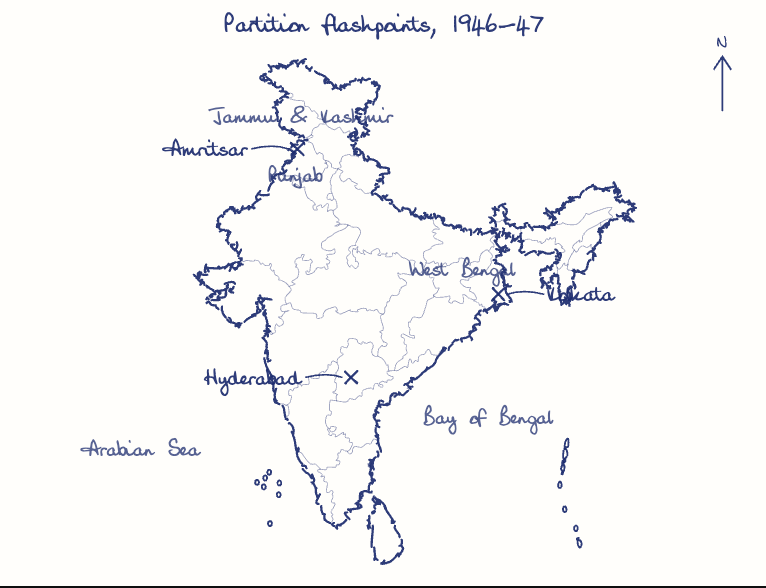
Mountbatten advanced the exit to 15 August 1947; Radcliffe drew borders in about five weeks, and the lapse of paramountcy left Kashmir and Hyderabad unresolved.
Limits
Direct Action Day and the Congress stand on grouping hardened positions on their own, and a weakened Britain could no longer impose a settlement.
This model answer is indicative and the model can make mistakes; please verify key facts independently.
Practise this question
1Get the answer sheet
Sized for this question.
2Write your answer
Timed, by hand.
3Get it marked
Your score and what to fix.
This chapter in the exam
Communalism/Partition of India1 question
Asked in 1 of 14 sittings since 2013
Question from the official UPSC Civil Services (Main) Examination 2019 paper. Answer written by Ghissu's engine and checked against our editorial standards. Found an error? Tell us and we correct it within 48 hours.