2021 · GS Paper 1 · Q9 · 10 marks
Examine the uniqueness of tribal knowledge system when compared with mainstream knowledge and cultural systems.
In short
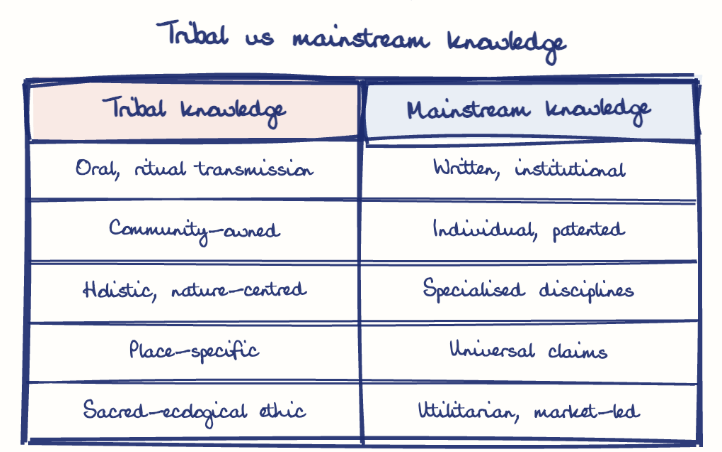
Tribal knowledge differs from mainstream systems by being oral, community-owned, holistic and rooted in a specific landscape, which makes it sustainable but vulnerable to biopiracy and erosion. The Kani tribe's arogyapacha knowledge, which led to the drug Jeevani with benefit-sharing, shows its value.
Model answer
Ghissu Editorial · Verified 4 Oct 2026 · 290 words
Collective and oral
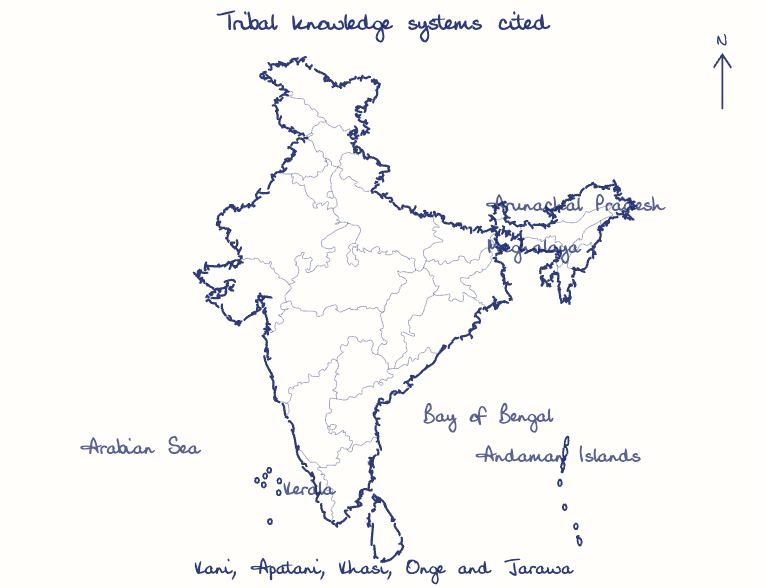
Knowledge passes through elders and rituals, as with the Kani of Kerala, whose arogyapacha plant became the drug Jeevani with a benefit-sharing trust.
Holistic and place-specific
Apatani rice-fish farming and Khasi living root bridges join farming, faith and forest, and the Onge and Jarawa read nature to escape the 2004 tsunami.
Culture fused with knowledge
The Dongria Kondh's sacred Niyamgiri hill was protected when their gram sabhas rejected bauxite mining after the Supreme Court's 2013 ruling.
Sustainability
Sacred groves, community seed banks and low-input farming offer climate-adaptation models that mainstream systems, long focused on yield alone, are only now beginning to value.
Exposure to biopiracy
Unwritten, communal knowledge is easily appropriated, and the Traditional Knowledge Digital Library covers codified systems like Ayurveda far better than oral tribal lore.
Erosion and limits
Displacement and schooling only in dominant languages erode it, though not every practice, such as some faith healing, is beneficial.
This model answer is indicative and the model can make mistakes; please verify key facts independently.
Practise this question
1Get the answer sheet
Sized for this question.
2Write your answer
Timed, by hand.
3Get it marked
Your score and what to fix.
This chapter in the exam
Salient features of Indian Society, Diversity of India23 questions
Asked in 13 of 14 sittings since 2013
- 2026Unity in diversity remains the defining feature of Indian society despite the challenges from communalism and regionalism. Comment.
- 2026Is caste disappearing in urban India? Illustrate your answer with examples.
All 23 questions, sorted by sub-topic, with model answers and practice.
Question from the official UPSC Civil Services (Main) Examination 2021 paper. Answer written by Ghissu's engine and checked against our editorial standards. Found an error? Tell us and we correct it within 48 hours.