2021 · GS Paper 1 · Q6 · 10 marks
What are the environmental implications of the reclamation of water bodies into urban land use ? Explain with examples.
In short
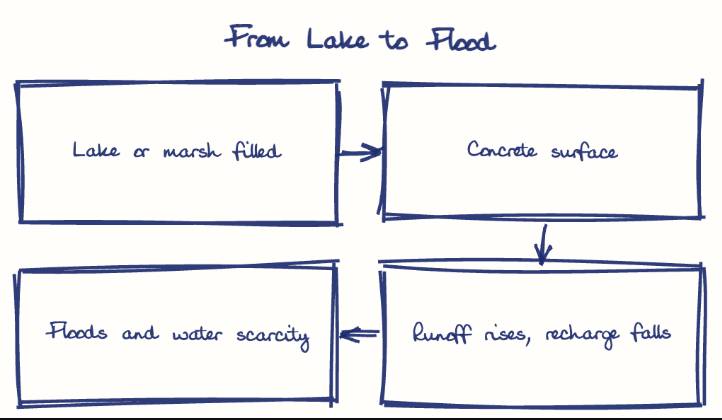
Reclaiming urban water bodies removes a city's natural flood storage, groundwater recharge, sewage treatment and cooling, causing floods, water scarcity and biodiversity loss. Velachery, built on a lake bed, went under in the 2015 Chennai floods as the shrunken Pallikaranai marsh could no longer absorb the overflow.
Model answer
Ghissu Editorial · Verified 4 Oct 2026 · 278 words
Urban flooding
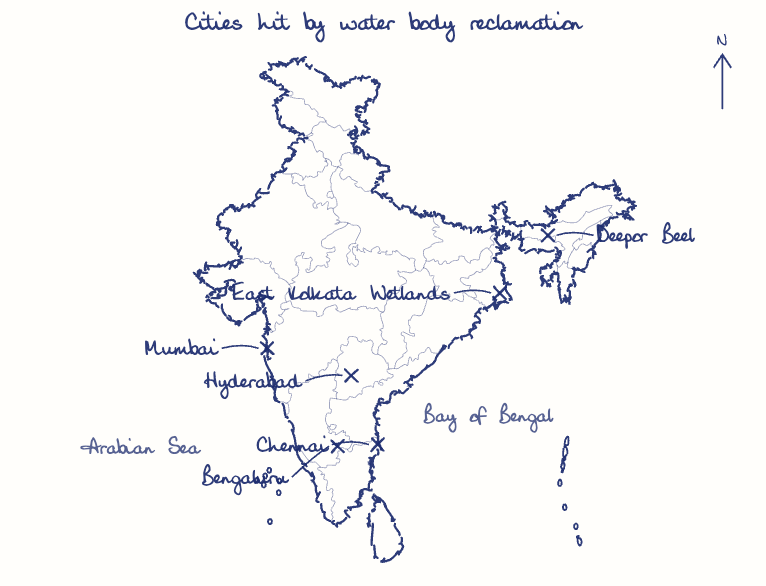
In the 2015 Chennai floods, Velachery, built on a lake bed, went under, and the shrunken Pallikaranai marsh could no longer absorb the overflow.
Blocked drainage
Bengaluru's 2022 Outer Ring Road flooding and Hyderabad's 2020 floods followed encroachment of lake beds and their linking channels.
Groundwater depletion
Concrete stops recharge, so cities that flood in the monsoon run dry in summer, as Bengaluru did in 2024.
Coastal backflow
Reclaimed mangroves and a narrowed Mithi river worsened Mumbai's July 2005 deluge, when Santacruz recorded 944 mm of rain in a day.
Loss of natural treatment
The East Kolkata Wetlands, a Ramsar site, treat much of the city's sewage, and reclamation sends waste untreated into rivers.
Biodiversity and heat
Filling Pallikaranai or Deepor Beel destroys bird and fish habitat, and replacing water with concrete intensifies the urban heat island.
Lost livelihoods
Fishers and washermen who depended on urban tanks lose their work.
This model answer is indicative and the model can make mistakes; please verify key facts independently.
Practise this question
1Get the answer sheet
Sized for this question.
2Write your answer
Timed, by hand.
3Get it marked
Your score and what to fix.
This chapter in the exam
Geographical Perspective on Selected Issues and Problems2 questions
Asked in 2 of 14 sittings since 2013
Question from the official UPSC Civil Services (Main) Examination 2021 paper. Answer written by Ghissu's engine and checked against our editorial standards. Found an error? Tell us and we correct it within 48 hours.