2021 · GS Paper 3 · Q19 · 15 marks
Analyse the multidimensional challenges posed by external state and non-state actors, to the internal security of India. Also discuss measures required to be taken to combat these threats.
In short
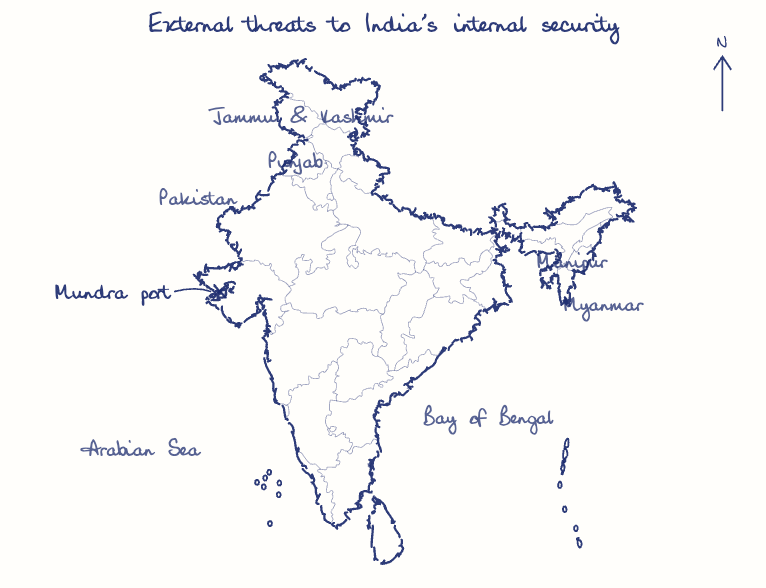
External state and non-state actors threaten India through proxy terrorism, foreign sanctuaries for insurgents, narco-terror finance and cyber and information warfare, which demand smart borders, intelligence fusion, finance curbs and cyber resilience. The 2021 Mundra port seizure of about 3,000 kg of heroin exposed the narco-terror funding chain.
Model answer
Ghissu Editorial · Verified 4 Oct 2026 · 303 words
Cross-border terrorism
Pakistan's use of Lashkar-e-Taiba and Jaish-e-Mohammed, from 26/11 (2008) to Pulwama (2019), lets a state wage deniable war.
Foreign sanctuary
North-East insurgents such as ULFA-I have used camps in Myanmar, and the 2015 Chandel ambush in Manipur showed how such sanctuaries become attacks on Indian soil.
Narco-terror finance
The seizure of about 3,000 kg of heroin at Mundra port in 2021, drone drops across the Punjab border and hawala networks fund militancy.
Cyber and information war
The China-linked group RedEcho targeted Indian power-grid centres (Recorded Future, 2021), and ISIS has recruited Indian youth online.
Smart borders
The Comprehensive Integrated Border Management System and anti-drone systems can close infiltration gaps.
Intelligence and finance
An operational NATGRID, the NIA (Amendment) Act 2019 and the UAPA power to designate individual terrorists, together with the 2022 ban on the Popular Front of India, target the whole chain.
Cyber resilience
NCIIPC and CERT-In's six-hour incident-reporting rule (2022) shield critical infrastructure.
Strategy and command
A published National Security Strategy and a revived National Counter Terrorism Centre would unify the response.
Hearts and minds
Skilling schemes such as Himayat in Jammu and Kashmir shrink the recruitment pool.
This model answer is indicative and the model can make mistakes; please verify key facts independently.
Practise this question
1Get the answer sheet
Sized for this question.
2Write your answer
Timed, by hand.
3Get it marked
Your score and what to fix.
This chapter in the exam
Non-state Actors1 question
Asked in 1 of 14 sittings since 2013
Question from the official UPSC Civil Services (Main) Examination 2021 paper. Answer written by Ghissu's engine and checked against our editorial standards. Found an error? Tell us and we correct it within 48 hours.