2021 · GS Paper 3 · Q15 · 15 marks
What are the research and developmental achievements in applied biotechnology ? How will these achievements help to uplift the poorer sections of the society ?
In short
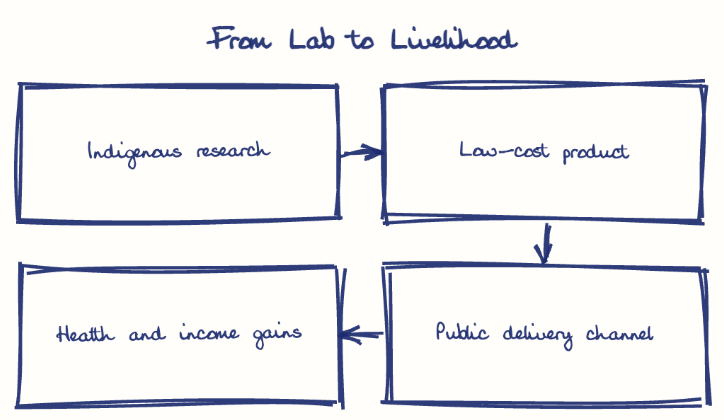
India's applied biotechnology has delivered genome-edited rice, indigenous vaccines, low-cost diagnostics and home-grown cancer therapy. Products such as Rotavac at about a dollar a dose and ICAR's edited rice with up to 19% higher yields can raise incomes and cut disease among the poor.
Model answer
Ghissu Editorial · Verified 4 Oct 2026 · 277 words
Agriculture
Bt cotton (2002), GEAC's 2022 clearance for GM mustard DMH-11 and ICAR's genome-edited rice varieties DRR Dhan 100 and Pusa DST Rice 1 (2025) mark steady progress.
Health
Rotavac joined the Universal Immunisation Programme in 2016, Truenat brought chip-based TB testing (WHO-endorsed 2020), and NexCAR19 (2023) became India's first home-grown CAR-T therapy.
Genomics and environment
The Genome India Project sequenced 10,000 genomes, and TERI's Oilzapper bacteria clean oil sludge.
Farm incomes
ICAR reports up to 19% higher yields with less water from the edited rice lines, and certified tissue-culture banana gives small growers disease-free plants.
Affordable care
Rotavac costs about a dollar a dose, and NexCAR19 roughly a tenth of imported therapy.
Livestock and jobs
Sex-sorted semen under the Rashtriya Gokul Mission and village mushroom and biofertiliser units add income for marginal households and women's self-help groups.
Clear regulation and outreach
Time-bound rules for edited and GM crops, and Biotech-KISAN hubs with Krishi Vigyan Kendras, would speed adoption by smallholders.
This model answer is indicative and the model can make mistakes; please verify key facts independently.
Practise this question
1Get the answer sheet
Sized for this question.
2Write your answer
Timed, by hand.
3Get it marked
Your score and what to fix.
This chapter in the exam
Bio-technology7 questions
Asked in 7 of 14 sittings since 2013
- 2026Explain by giving two examples, how biotechnology has helped the Indian farmers in processing their perishable crops. (Answer in 150 words)
- 2023Discuss several ways in which microorganisms can help in meeting the current fuel shortage.
All 7 questions, sorted by sub-topic, with model answers and practice.
Question from the official UPSC Civil Services (Main) Examination 2021 paper. Answer written by Ghissu's engine and checked against our editorial standards. Found an error? Tell us and we correct it within 48 hours.