2022 · GS Paper 1 · Q18 · 15 marks
Analyse the salience of 'sect' in Indian society vis-a-vis caste, region and religion.
In short
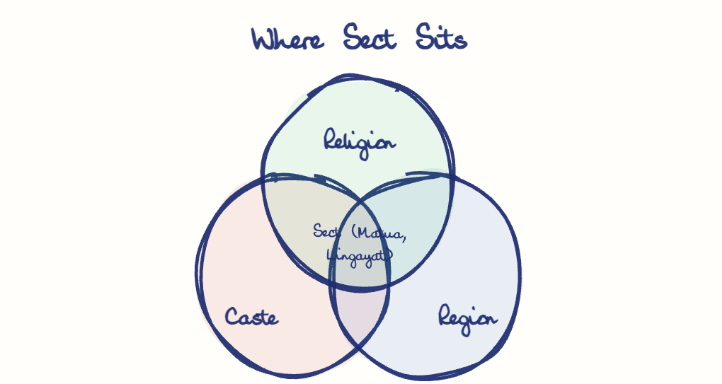
Sect cuts across caste, region and religion: it often begins as a revolt against caste, then hardens into one, expresses regional culture, and divides religions from within. Lingayats show the whole arc, from Basavanna's anti-caste movement to the 2018 Karnataka push for separate religion status.
Model answer
Ghissu Editorial · Verified 4 Oct 2026 · 266 words
Born against caste
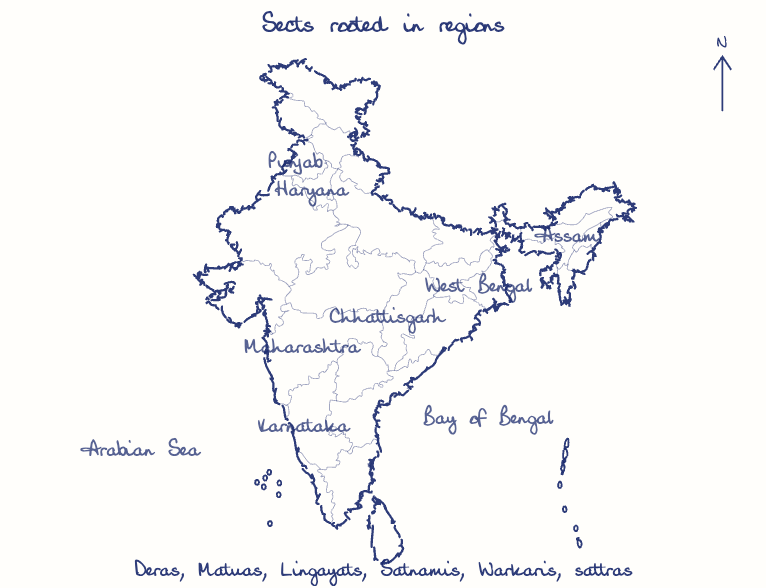
Basavanna's Lingayats, the Kabirpanthis and Guru Ghasidas's Satnamis rose as revolts against hierarchy, offering equality before God.
Hardening into caste
Many became endogamous, so Lingayats carry internal jatis and Satnamis act largely as a Scheduled Caste community.
Dalit assertion and votes
The Ravidassia and Matua sects voice Dalit and Namasudra identity, and deras in Punjab and Lingayat mathas in Karnataka are courted as vote blocs.
Rooted in region
The Warkari pilgrimage to Pandharpur and Sankardeva's sattras on Majuli express regional culture better than religion does.
Fault lines within religion
Shia-Sunni and Digambara-Shvetambara splits divide faiths from inside, and the Karnataka cabinet in 2018 backed separate religion status for Lingayats.
Courts and autonomy
Saifuddin (1962) upheld Bohra excommunication under Article 26, while Sabarimala (2018) denied Ayyappa devotees denomination status.
Balance and accountability
Weigh sect autonomy against individual dignity under Articles 14 and 21, and make large deras financially transparent.
This model answer is indicative and the model can make mistakes; please verify key facts independently.
Practise this question
1Get the answer sheet
Sized for this question.
2Write your answer
Timed, by hand.
3Get it marked
Your score and what to fix.
This chapter in the exam
Salient features of Indian Society, Diversity of India23 questions
Asked in 13 of 14 sittings since 2013
- 2026Unity in diversity remains the defining feature of Indian society despite the challenges from communalism and regionalism. Comment.
- 2026Is caste disappearing in urban India? Illustrate your answer with examples.
All 23 questions, sorted by sub-topic, with model answers and practice.
Question from the official UPSC Civil Services (Main) Examination 2022 paper. Answer written by Ghissu's engine and checked against our editorial standards. Found an error? Tell us and we correct it within 48 hours.