2024 · GS Paper 2 · Q19 · 15 marks
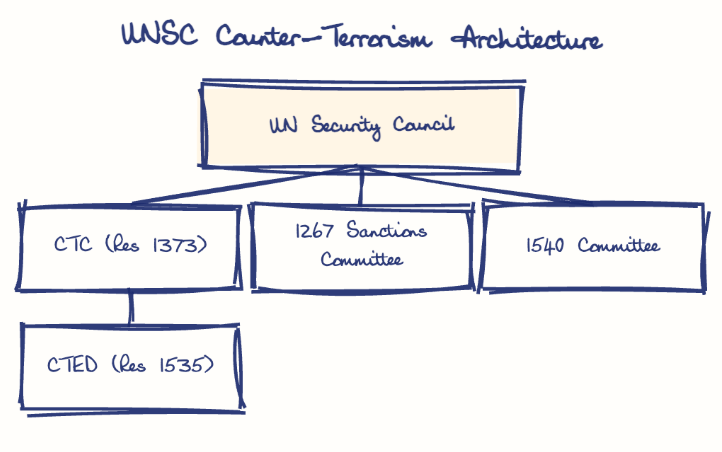
Terrorism has become a significant threat to global peace and security.' Evaluate the effectiveness of the United Nations Security Council's Counter Terrorism Committee (CTC) and its associated bodies in addressing and mitigating this threat at the international level.
In short
The UNSC Counter-Terrorism Committee and its associated bodies have been effective in setting binding global norms and sanctions but only partly effective as enforcers, because listings are politicised and terrorism remains undefined. China blocked the listing of 26/11 plotter Sajid Mir in 2023.
Model answer
Ghissu Editorial · Verified 4 Oct 2026 · 277 words
Binding norms
Resolution 1373, under Chapter VII, obliged states to criminalise terror financing and deny safe haven, and CTED checks compliance through country visits.
Sanctions with teeth
The 1267 regime's listings of Masood Azhar (2019) and Abdul Rehman Makki (2023) backed India's case against Pakistan-based groups.
Adapting to threats
Resolutions on foreign terrorist fighters (2178, 2014) and terror financing (2462, 2019), and the CTC's Delhi Declaration (2022) on drones and virtual assets, kept pace with new threats.
No agreed definition
India's Comprehensive Convention on International Terrorism (1996) remains stalled, allowing "good" versus "bad" terrorist distinctions.
Politicised listings
China's anonymous technical holds blocked Masood Azhar four times and Sajid Mir of 26/11 in 2023, and the April 2025 Pahalgam statement omitted The Resistance Front.
No enforcement
The CTC assesses but cannot compel, so Pakistan moved more under FATF's grey-listing (2018-2022) than under years of UN reporting, while overlapping UN bodies lean on voluntary donor funds.
This model answer is indicative and the model can make mistakes; please verify key facts independently.
Practise this question
1Get the answer sheet
Sized for this question.
2Write your answer
Timed, by hand.
3Get it marked
Your score and what to fix.
This chapter in the exam
Institutions12 questions
Asked in 10 of 14 sittings since 2013
- 2025"The reform process in the United Nations remains unresolved, because of the delicate imbalance of East and West and entanglement of the USA vs. Russo-Chinese alliance." Examine and critically evaluate the East-West policy confrontations in this regard.
- 2023Sea is an important Component of the Cosmos' Discuss in the light of the above statement the role of the IMO (International Maritime Organisation) in protecting environment and enhancing maritime safety and security.
All 12 questions, sorted by sub-topic, with model answers and practice.
Question from the official UPSC Civil Services (Main) Examination 2024 paper. Answer written by Ghissu's engine and checked against our editorial standards. Found an error? Tell us and we correct it within 48 hours.