2025 · GS Paper 2 · Q9 · 10 marks
India-Africa digital partnership is achieving mutual respect, co-development and long-term institutional partnerships. Elaborate.
In short
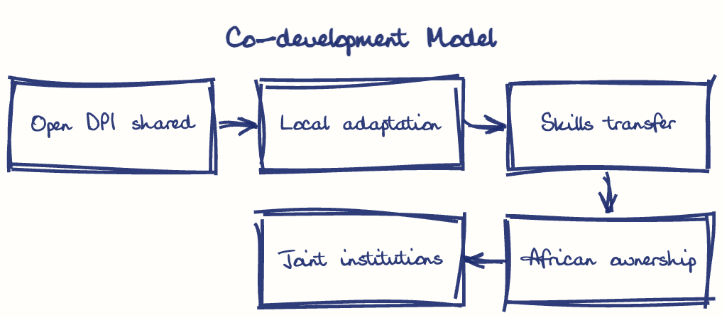
India's digital partnership with Africa rests on sharing open, sovereign-by-design technology and building local skills and institutions rather than dependency. Open-source MOSIP behind Ethiopia's Fayda ID and NPCI's help for Namibia's own UPI-like system show co-development in practice.
Model answer
Ghissu Editorial · Verified 4 Oct 2026 · 270 words
Demand-driven
PM Modi's Kampala principles (2018) pledged that cooperation would follow African priorities and build local capacity, not impose conditions.
Open-source sovereignty
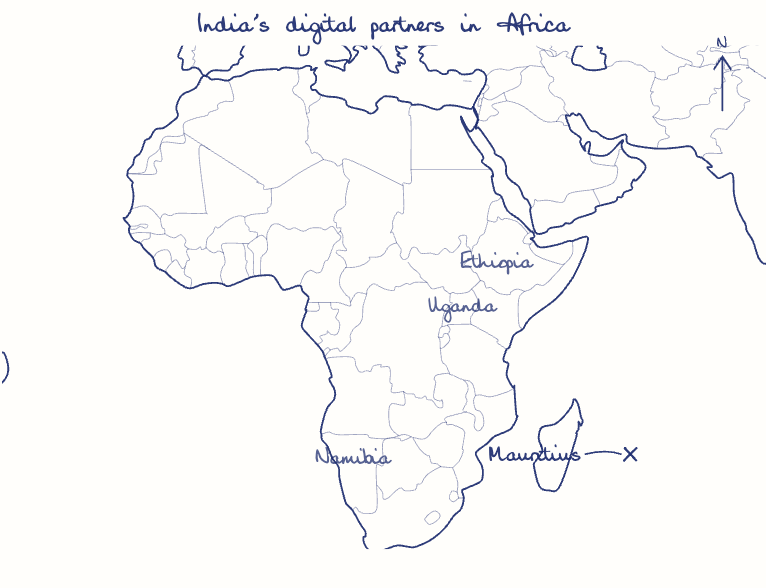
MOSIP, the open-source ID platform from IIIT Bangalore, underpins Ethiopia's Fayda digital ID, so Ethiopia owns its code and data.
Payments co-built
NPCI International is helping the Bank of Namibia build its own UPI-like system (2024), and UPI and RuPay went live in Mauritius in February 2024.
From network to platform
The Pan-African e-Network (2009), run with the African Union, was succeeded in 2019 by e-VidyaBharati and e-ArogyaBharati for free tele-education and tele-medicine.
Skills that stay
The IIT Madras campus in Zanzibar (2023) teaches data science and AI, while ITEC trains African officials in e-governance.
Global South anchoring
India launched the Global DPI Repository and pledged US$ 25 million to a Social Impact Fund for DPI adoption.
Bilateral depth
The December 2025 visit to Ethiopia yielded agreements including one on a data centre.
This model answer is indicative and the model can make mistakes; please verify key facts independently.
Practise this question
1Get the answer sheet
Sized for this question.
2Write your answer
Timed, by hand.
3Get it marked
Your score and what to fix.
This chapter in the exam
Bilateral7 questions
Asked in 6 of 14 sittings since 2013
- 2021"If the last few decades were of Asia's growth story, the next few are expected to be of Africa's." In the light of this statement, examine India's influence in Africa in recent years.
- 2019What introduces friction into the ties between India and the United States is that Washington is still unable to find for India a position in its global strategy, which would satisfy India's national self-esteem and ambitions.' Explain with suitable examples.
All 7 questions, sorted by sub-topic, with model answers and practice.
Question from the official UPSC Civil Services (Main) Examination 2025 paper. Answer written by Ghissu's engine and checked against our editorial standards. Found an error? Tell us and we correct it within 48 hours.