2026 · GS Paper 2 · Q6 · 10 marks
Does India’s tribal development policy reflect the aspirations for a socially grounded and equity-based governance ? Justify your answer.
In short
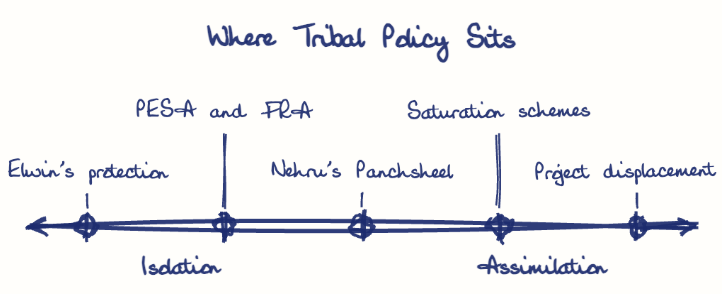
India's tribal development policy reflects socially grounded and equity-based governance only partly: PESA, the Forest Rights Act and PM-JANMAN embody it on paper. In practice over a third of FRA claims are rejected and tribals bear a disproportionate share of project displacement.
Model answer
Ghissu Editorial · Verified 4 Oct 2026 · 278 words
Self-rule in law
PESA (1996) makes the gram sabha competent to protect customs, community resources and minor forest produce.
Forest rights
The Forest Rights Act (2006) restores community rights; in the Niyamgiri case (2013) Dongria Kondh gram sabhas rejected bauxite mining.
Equity in budgets
The Development Action Plan for Scheduled Tribes obliges central ministries to earmark a share of their outlays for Scheduled Tribes.
Most excluded first
PM-JANMAN (2023) saturates 75 Particularly Vulnerable Tribal Groups with housing, roads and water, and Eklavya schools extend education.
Delayed self-rule
States took decades to frame PESA rules, and departments still override gram sabha consent.
Rights denied
Ministry of Tribal Affairs data show over a third of FRA claims rejected.
Displacement
The Xaxa Committee (2014) found tribals bearing a disproportionate share of project displacement, as the Great Nicobar project now threatens the Shompen.
Top-down delivery
Schemes are designed far from the village, and Adi Karmayogi (2025) has only begun training tribal-responsive local cadres.
This model answer is indicative and the model can make mistakes; please verify key facts independently.
Practise this question
1Get the answer sheet
Sized for this question.
2Write your answer
Timed, by hand.
3Get it marked
Your score and what to fix.
This chapter in the exam
Tribals1 question
Asked in 1 of 14 sittings since 2013
Question from the official UPSC Civil Services (Main) Examination 2026 paper. Answer written by Ghissu's engine and checked against our editorial standards. Found an error? Tell us and we correct it within 48 hours.