Critically Examine the performance of X Five Year Plan.
In short
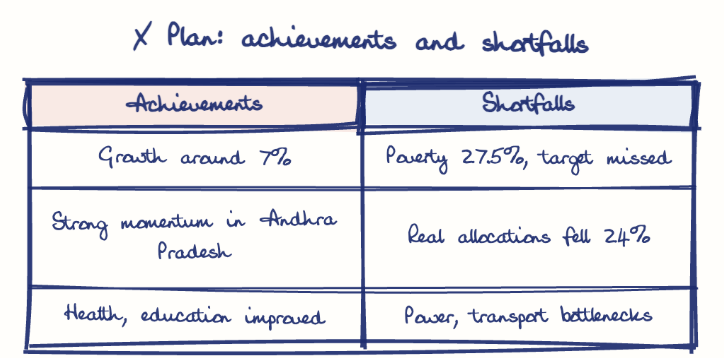
The X Plan (2002-2007) delivered about 7.7% average growth, below its 8% target but the highest of any Plan till then. It missed its poverty target, as fiscal shortfalls (a real cut of about 24% in plan size), weak agriculture and lagging infrastructure held it back.
Model answer
Ghissu Editorial · Verified 4 Oct 2026 · 260 words
Fiscal Shortfalls
The Plan’s ₹15.25 lakh crore outlay shrank by 24% in real terms, constraining infrastructure and social schemes. This fiscal slippage reduced capital expenditure critical for long-term growth.
Coordination Issues and Revenue Mobilization
Planning Commission’s limited central-state coordination affected execution; Andhra Pradesh1 struggled with fiscal deficits and resource mobilization. Additionally, inadequate revenue generation led to higher borrowings, restricting development spending.
Growth and Poverty
GDP grew about 7.7%, just below target; NSS put poverty at 27.5% in 2004-05 (21.8% on the comparable mixed recall basis), far from the 19.2% target, reflecting poor benefit distribution. The incremental capital-output ratio remained high, indicating inefficiencies in investment.
Inclusive Growth and Innovation
Target poverty alleviation using state strengths (e.g., aquaculture and horticulture in Andhra Pradesh); boost infrastructure via PPPs and corridors like Visakhapatnam-Chennai. Leveraging schemes such as PM-JANMAN and Atal Innovation Mission can foster sustainable development.
This model answer is indicative and the model can make mistakes; please verify key facts independently.
Practise this question
1Get the answer sheet
Sized for this question.
2Write your answer
Timed, by hand.
3Get it marked
Your score and what to fix.
This chapter in the exam
Major Challenges of Indian Economy26 questions
Asked in 8 of 8 sittings since 2008
Most tested: Unemployment and employment structure
- 2025Discuss how infrastructure bottlenecks hinder the growth of the Indian Manufacturing sector. What steps can be taken to address them?
- 2025Analyse the factors contributing to India's Current Account Deficit (CAD) and unfavourable Balance of Payments (BoP) and discuss their implications for the Indian economy.
All 26 questions, sorted by sub-topic, with model answers and practice.
Question from the official APPSC Group-I Mains 2011 paper. Answer written by Ghissu's engine and checked against our editorial standards. Found an error? Tell us and we correct it within 48 hours.