What is Intellectual Property? Explain with examples the differences between copyrights, patents, and trademarks. What are the rights an inventor has on his invention, and how are these rights gained and enforced globally?
In short
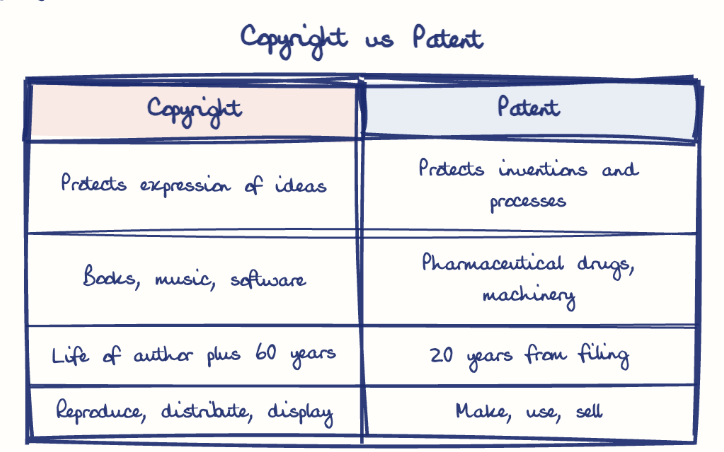
Intellectual property is a legal right over creations of the mind: copyright protects expression like books, patents protect inventions for 20 years, and trademarks protect brand logos. Inventors gain rights by filing with a national patent office and enforce them abroad through TRIPS, the Paris Convention and the PCT.
Model answer
Ghissu Editorial · Verified 4 Oct 2026 · 328 words
IP Concept and Legal Protection
IP covers inventions, artistic works, and symbols protected by law to incentivize creativity; rights are territorial but supported by international treaties facilitating cross-border enforcement.
Andhra Pradesh’s Role
The Andhra Pradesh Innovation Society promotes IP registration and awareness, aiding local innovators and aligning with national policies to nurture intellectual assets.
Patents
Protect novel inventions for 20 years, e.g., agricultural biotech from Acharya N.G. Ranga Agricultural University, granting exclusive manufacturing, use, and sale rights.
Trade Secrets
Protect confidential business information without formal registration, such as proprietary recipes or processes, providing competitive advantage.
Exclusive Rights and Patent Process
Inventors exclude others from making, using, or selling their invention by filing patents examined for novelty, inventive step, and industrial applicability at national offices like the Indian Patent Office.
International Treaties and Cases
Paris Convention and TRIPS Agreement standardize protection and dispute resolution; the Novartis AG v. Union of India1 (2013) case exemplifies balancing patent rights with public health concerns.
Enforcement
Rights are enforced through infringement suits in courts and customs action against counterfeits, with the Patent Cooperation Treaty easing filing in many countries at once.
This model answer is indicative and the model can make mistakes; please verify key facts independently.
Sources
Practise this question
1Get the answer sheet
Sized for this question.
2Write your answer
Timed, by hand.
3Get it marked
Your score and what to fix.
This chapter in the exam
Intellectual Property Rights; Promotion of Science in AP and India6 questions
Asked in 4 of 8 sittings since 2008
Most tested: Patent-centric IPR understanding and commercialization of intellectual property in India.
- 2025Describe the importance of IPR in academic and industrial research collaborations.
- 2023What are the tools required for the successful commercialization of Intellectual Property Rights in India ? Discuss the role of CIPAM in commercialization of Intellectual Property Rights.
All 6 questions, sorted by sub-topic, with model answers and practice.
Question from the official APPSC Group-I Mains 2020 paper. Answer written by Ghissu's engine and checked against our editorial standards. Found an error? Tell us and we correct it within 48 hours.