Discuss the role of missionaries in the growth and spread of education in Andhra region.
In short
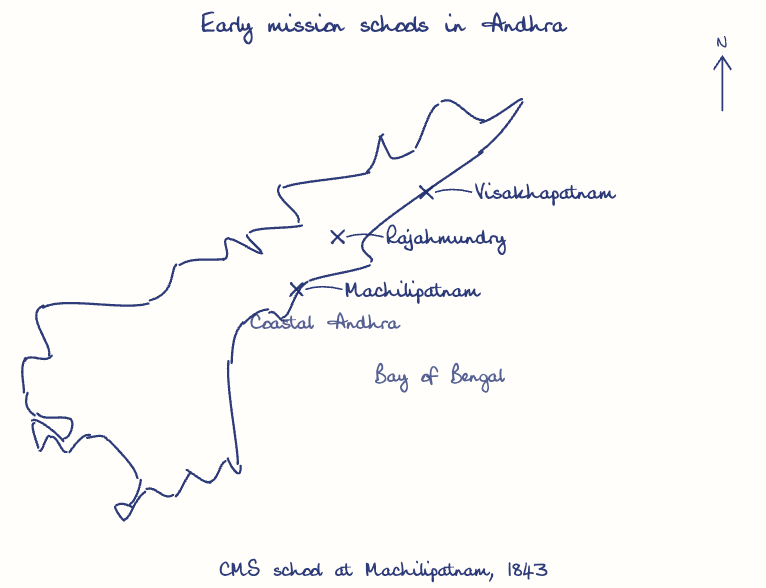
Missionaries pioneered modern education in Andhra by founding schools and colleges, introducing English and new subjects, and championing girls' education through girls' schools and zenana classes, aided by colonial grants-in-aid. The Church Missionary Society's school at Machilipatnam (1843), later a college, typified their role.
Model answer
Ghissu Editorial · Verified 4 Oct 2026 · 256 words
Institution Establishment
Missionaries founded schools like the Church Missionary Society’s at Machilipatnam in 1843 and others in Rajahmundry and Visakhapatnam, pioneering Western-style education. They introduced secondary and technical schools, broadening educational opportunities beyond traditional systems.
Social Reform Catalyst
Missionaries worked against child marriage, female infanticide, and the devadasi system, fostering a Western-educated elite that influenced Andhra’s reform and nationalist movements. Their collaboration with local reformers helped shift social attitudes, especially regarding women’s rights and caste practices.
Cultural Dynamics
While promoting Christianity and Western values, missionary schools also taught Hindu scriptures, reflecting complex cultural negotiations. This approach reduced alienation and allowed coexistence of traditional and modern ideas despite occasional tensions.
Government Support
British grants-in-aid facilitated missionary education in underserved coastal and tribal areas, despite opposition over cultural concerns. This partnership accelerated literacy growth where government resources were limited.
Contemporary Legacy
Missionary-founded institutions persist, influencing Andhra’s education system, and their priorities resonate with present programmes like Samagra Shiksha Abhiyan1. Their early focus on female education and social welfare continues to resonate in current inclusive education initiatives.
This model answer is indicative and the model can make mistakes; please verify key facts independently.
Practise this question
1Get the answer sheet
Sized for this question.
2Write your answer
Timed, by hand.
3Get it marked
Your score and what to fix.
This chapter in the exam
Andhra - Modern14 questions
Asked in 5 of 8 sittings since 2008
Most tested: Social awakening in Andhra through education, print/language reform, and reform personalities.
- 2025What factors contributed to the process of social awakening in the Andhra region in the second half of the 19th century?
- 2023Write a short note on the following East India Company officials and their contributions : (iii) Charles Phillip Brown
All 14 questions, sorted by sub-topic, with model answers and practice.
Question from the official APPSC Group-I Mains 2025 paper. Answer written by Ghissu's engine and checked against our editorial standards. Found an error? Tell us and we correct it within 48 hours.