Define the term 'deficit' in government finance. Explain the various types of deficits and their economic implications.
In short
A deficit is the excess of government expenditure over revenue, and its main types are revenue, effective revenue, fiscal and primary deficits, each with distinct effects on debt and growth. The Union Budget 2026-27 targets a fiscal deficit of 4.3% of GDP, while Andhra Pradesh aims for 3.8% of GSDP.
Model answer
Ghissu Editorial · Verified 4 Oct 2026 · 266 words
Definition and Role
Deficit arises when expenditure exceeds revenue, requiring borrowing. Deficit financing, used in India since the Second Five Year Plan, supports growth and socio-political goals. Andhra Pradesh54 increased capital expenditure despite revenue shortfalls, reflecting this trade-off. It enables governments to invest in infrastructure and welfare without immediate revenue.
Types of Deficits
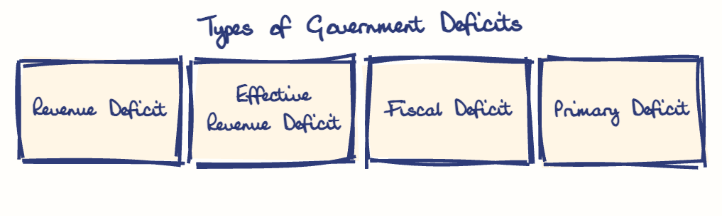
Revenue deficit is excess revenue expenditure over receipts; Andhra Pradesh's revenue deficit quadrupled in 2022-23, sharply reducing capital expenditure. Fiscal deficit measures total borrowing needs; Andhra Pradesh targets 3.8%6 of GSDP in 2026-27. Primary deficit excludes interest payments, with India aiming for 0.7% of GDP. Effective revenue deficit, excluding capital grants, was 0.9% of GDP in Union Budget 2024-25. These classifications help assess fiscal discipline and sustainability.
Investor Confidence and State Challenges
Large deficits may erode investor confidence, raising borrowing costs and inflation. Andhra Pradesh faces fiscal challenges with liabilities at 43.99% of GSDP (March 2023) and off-budget borrowings complicating management. Effective deficit control is vital to maintain credit ratings and economic stability.
This model answer is indicative and the model can make mistakes; please verify key facts independently.
Practise this question
1Get the answer sheet
Sized for this question.
2Write your answer
Timed, by hand.
3Get it marked
Your score and what to fix.
This chapter in the exam
Government Budgeting (Union)15 questions
Asked in 6 of 8 sittings since 2008
Most tested: Finance Commission, deficits, and fiscal consolidation in the Indian federal budget system.
- 2025What do you understand by Government Budget? Briefly explain the types of public expenditure and how these expenditures are classified in the government budget.
- 2025Discuss the significance of the recommendations of the latest Finance Commission for the fiscal relations between the Union Government and the States in India, with specific reference to resource allocation and revenue sharing.
All 15 questions, sorted by sub-topic, with model answers and practice.
Question from the official APPSC Group-I Mains 2025 paper. Answer written by Ghissu's engine and checked against our editorial standards. Found an error? Tell us and we correct it within 48 hours.