In the light of agrarian distress, present a critical note on the role of crop science research in India.
In short
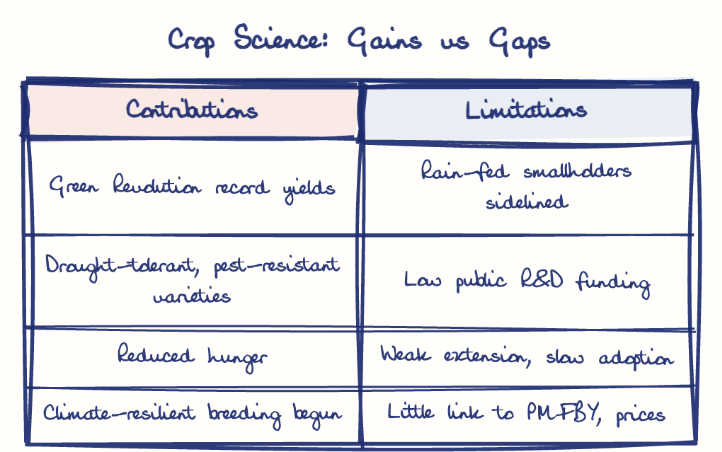
Crop science research raised yields through the Green Revolution and new stress-resilient varieties, but its input-intensive focus sidelined rain-fed smallholders, millets and pulses and caused ecological damage. Low public R&D funding, weak extension and poor links with insurance and markets limit its ability to relieve agrarian distress.
Model answer
Ghissu Editorial · Verified 4 Oct 2026 · 244 words
Farmer Vulnerabilities and Regional Inequality
Indebtedness, suicides, and income instability persist, especially in rain-fed regions; Telangana’s Rythu Bandhu and crop loan waivers have improved local outcomes beyond national averages.
Resource and Climate Challenges
Groundwater depletion and erratic rainfall threaten yields and livelihoods.
Yield and Resilience Gains
Green Revolution2 and biotech advances have increased production and developed drought- and pest-resistant varieties.
Exclusion and Funding Constraints
Emphasis on input-intensive crops marginalizes smallholders and millets; public R&D investment remains below developing world average, limiting innovation for diverse agro-ecologies including Telangana’s tribal zones.
Adoption Barriers and Climate Needs
Fragmented extension services and poor infrastructure hinder uptake; anticipatory breeding and precision agriculture remain underfunded.
Boost R&D and Extension
Increase funding to 1% of agri-GDP and strengthen farmer education using digital tools.
Promote Climate-Resilient Varieties and Insurance Synergy
Accelerate stress-tolerant seeds and integrate crop science with insurance and price support.
This model answer is indicative and the model can make mistakes; please verify key facts independently.
Practise this question
1Get the answer sheet
Sized for this question.
2Write your answer
Timed, by hand.
3Get it marked
Your score and what to fix.
This chapter in the exam
Crop science and plants2 questions
Asked in 2 of 2 sittings since 2016
Most tested: Applied crop science for rural livelihood improvement
Question from the official TGPSC Group-I Mains 2016 paper. Answer written by Ghissu's engine and checked against our editorial standards. Found an error? Tell us and we correct it within 48 hours.