2013 · GS Paper 1 · Q16 · 10 marks
"Male membership needs to be encouraged in order to make women's organization free from gender bias." Comment.
In short
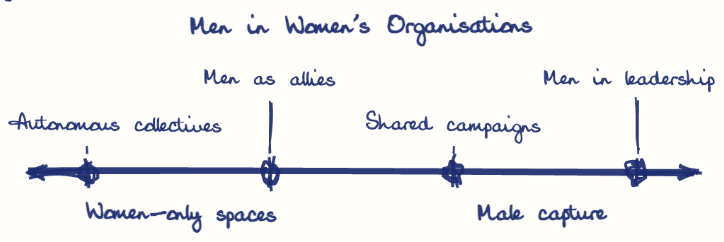
Encouraging men as members can reduce gender bias by reaching male gatekeepers and reframing women's issues as social issues, but it cannot replace women's leadership and safe spaces. The sarpanch pati phenomenon shows how male presence can capture spaces meant for women.
Model answer
Ghissu Editorial · Verified 4 Oct 2026 · 274 words
Changing the gatekeepers
Fathers, husbands and panchayat leaders decide whether a girl studies or a wife works, and male members can carry the message into these spaces.
From "women's issue" to social issue
Men help reframe dowry, violence and unpaid care as society's problems, countering the charge that women's groups are anti-men.
Proven male allies
Mumbai's Men Against Violence and Abuse (MAVA) sensitises young men, as Vidyasagar's campaign for the Hindu Widows' Remarriage Act 1856 once did.
Risk of capture
The "sarpanch pati" phenomenon, where husbands run seats reserved for women, shows how male presence can take over women's spaces.
Safe spaces matter
Survivors often speak only in women-only forums; SEWA (founded 1972 by Ela Bhatt) and Kudumbashree built confidence because women led them.
Bias is structural
Gender bias comes from patriarchy, not membership, and men who join without examining privilege can reproduce paternalism.
This model answer is indicative and the model can make mistakes; please verify key facts independently.
Practise this question
1Get the answer sheet
Sized for this question.
2Write your answer
Timed, by hand.
3Get it marked
Your score and what to fix.
This chapter in the exam
Role of women and women's organization13 questions
Asked in 8 of 14 sittings since 2013
- 2024Distinguish between gender equality, gender equity and women's empowerment. Why is it important to take gender concerns into account in programme design and implementation?
- 2024Globalization has increased urban migration by skilled, young, unmarried women from various classes. How has this trend impacted upon their personal freedom and relationship with family?
All 13 questions, sorted by sub-topic, with model answers and practice.
Question from the official UPSC Civil Services (Main) Examination 2013 paper. Answer written by Ghissu's engine and checked against our editorial standards. Found an error? Tell us and we correct it within 48 hours.