2013 · GS Paper 2 · Q11 · 10 marks
The legitimacy and accountability of Self Help Groups (SHGs) and their patrons, the micro-finance outfits, need systematic assessment and scrutiny for the sustained success of the concept. Discuss.
In short
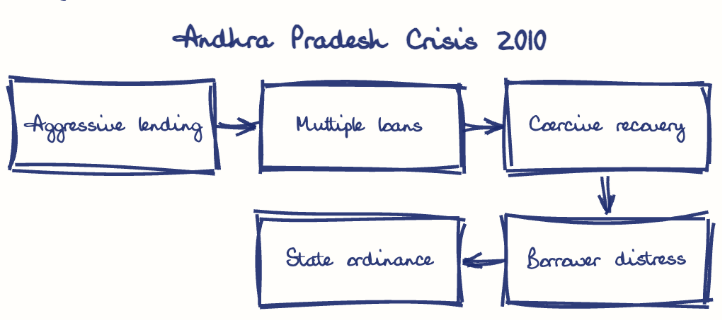
SHGs and their MFI patrons need systematic scrutiny because mission drift, paper groups, elite capture and opaque books erode the trust the model runs on. The 2010 Andhra Pradesh crisis led to the Malegam Committee and today's RBI caps on borrower indebtedness.
Model answer
Ghissu Editorial · Verified 4 Oct 2026 · 271 words
Mission drift
SKS Microfinance's 2010 stock-market listing, months before the crisis, drew charges that loan targets had displaced borrower welfare.
Paper groups
Target-driven formation under SGSY (1999) produced groups formed only to draw the subsidy.
Elite capture
Dominant castes and village elites often take leadership and the larger loans, leaving the poorest at the margin.
Opaque books
Poor record-keeping hides how savings and loans were used, which matters more now that SHGs run take-home-ration units and fair-price shops.
Prudential regulation
The Malegam Committee (2011) led to the NBFC-MFI category, and the RBI's 2022 framework caps repayments at half of household income.
Self-regulation and data
MFIN and Sa-Dhan enforce a code of conduct, and credit-bureau reporting exposes multiple borrowing.
Grading and member audit
DAY-NRLM grades groups on the Panchasutra norms of regular meetings, savings, lending, repayment and books, NABARD's EShakti digitises accounts, and Kudumbashree's community auditors let members check the books.
This model answer is indicative and the model can make mistakes; please verify key facts independently.
Practise this question
1Get the answer sheet
Sized for this question.
2Write your answer
Timed, by hand.
3Get it marked
Your score and what to fix.
This chapter in the exam
SHGs6 questions
Asked in 6 of 14 sittings since 2013
- 2021Can the vicious cycle of gender inequality, poverty and malnutrition be broken through microfinancing of women SHGs? Explain with examples.
- 2020"Micro-Finance as an anti-poverty vaccine, is aimed at asset creation and income security of the rural poor in India". Evaluate the role of the Self Help Groups in achieving the twin objectives along with empowering women in rural India.
All 6 questions, sorted by sub-topic, with model answers and practice.
Question from the official UPSC Civil Services (Main) Examination 2013 paper. Answer written by Ghissu's engine and checked against our editorial standards. Found an error? Tell us and we correct it within 48 hours.