2013 · GS Paper 2 · Q18 · 10 marks
The proposed withdrawal of International Security Assistance Force (ISAF) from Afghanistan in 2014 is fraught with major security implications for the countries of the region. Examine in light of the fact that India is faced with a plethora of challenges and needs to safeguard its own strategic interests.
In short
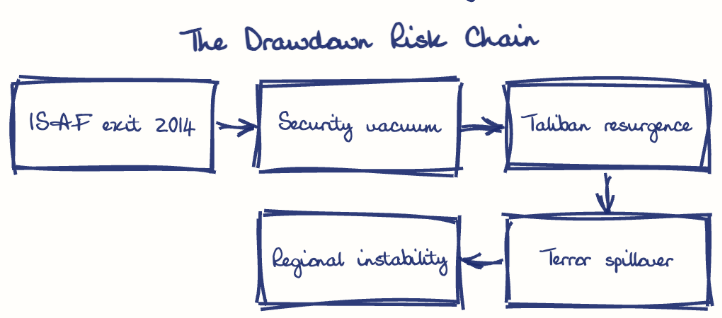
The 2014 ISAF withdrawal threatened a security vacuum that would let the Taliban and Pakistan-backed networks regain ground and spill terror, drugs and refugees across the region. For India it endangered Kashmir, its embassy and its roughly $2 billion development stake in Afghanistan.
Model answer
Ghissu Editorial · Verified 4 Oct 2026 · 266 words
Fragile Afghan forces
The Afghan National Security Forces still relied on Western money, air power and logistics.
Pakistan's strategic depth
The Quetta-based Taliban and the Haqqani network would gain room, letting Pakistan seek a friendly Kabul.
Spillover
Uzbek and Uighur militants threaten Central Asia and Xinjiang, and Afghan opium, the world's largest supply per UNODC, fuels regional crime.
Terror diversion
After the 1989 Soviet withdrawal, fighters turned to Kashmir, and a repeat would bring Lashkar and Jaish cadres back.
Assets under attack
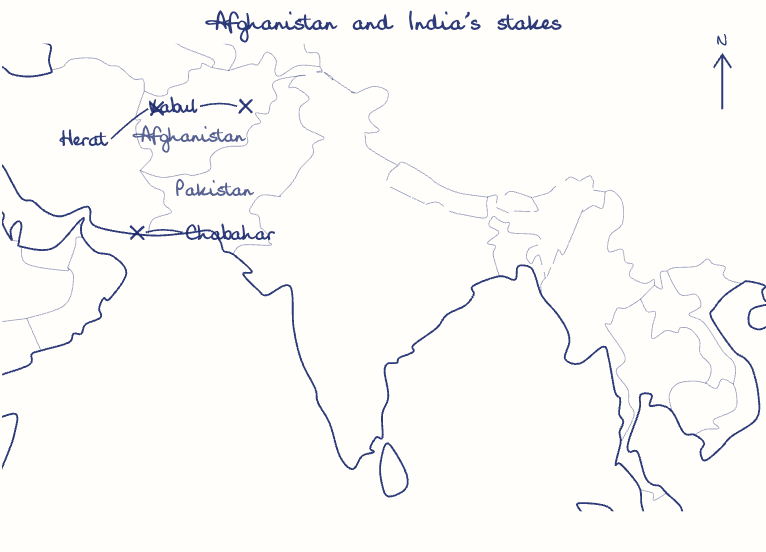
The 2008 Kabul embassy bombing and the 2014 Herat consulate attack show India's presence is a target.
Development stake
India's roughly $2 billion commitment, including the Zaranj-Delaram highway and Salma Dam, would be at risk.
Safeguards
The 2011 Strategic Partnership Agreement lets India train Afghan officers, while Chabahar and the INSTC offer a route to Central Asia that bypasses Pakistan.
This model answer is indicative and the model can make mistakes; please verify key facts independently.
Practise this question
1Get the answer sheet
Sized for this question.
2Write your answer
Timed, by hand.
3Get it marked
Your score and what to fix.
This chapter in the exam
Neighbourhood Relations13 questions
Asked in 7 of 14 sittings since 2013
- 2026“China’s Belt and Road Initiative (BRI) has transformed South Asia from a regional space into a theatre of great power competition.” Analyse the strategic implications of the BRI for India’s security and regional influence in South Asia.
- 2024Discuss the geopolitical and geostrategic importance of Maldives for India with a focus on global trade and energy flows. Further also discuss how this relationship affects India's maritime security and regional stability amidst international competition ?
All 13 questions, sorted by sub-topic, with model answers and practice.
Question from the official UPSC Civil Services (Main) Examination 2013 paper. Answer written by Ghissu's engine and checked against our editorial standards. Found an error? Tell us and we correct it within 48 hours.