2013 · GS Paper 3 · Q12 · 10 marks
Adoption of PPP model for infrastructure development of the country has not been free of criticism. Critically discuss pros and cons of the model.
In short
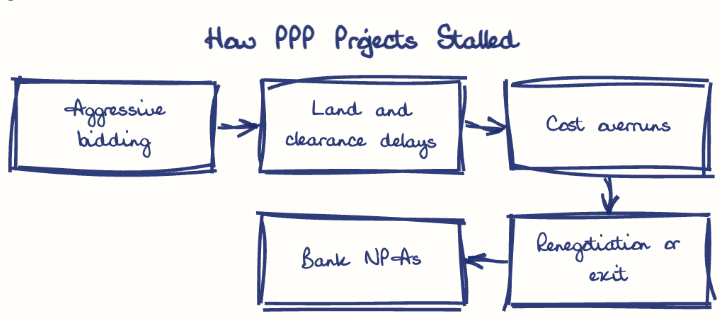
PPP brought private capital, efficiency and risk transfer to Indian infrastructure, but aggressive bidding, off-budget liabilities, user burden and weak regulation drew criticism. The flaws lay in early design, which reforms such as the Kelkar Committee (2015) and the Hybrid Annuity Model (2016) have since addressed.
Model answer
Ghissu Editorial · Verified 4 Oct 2026 · 273 words
Capital beyond the budget
Private finance built assets the state could not fund alone, such as the greenfield Hyderabad and Bengaluru airports opened in 2008.
Efficiency and upkeep
Performance-linked concessions brought faster construction and better maintenance, as at the Delhi and Mumbai airports.
Risk transfer and technology
Private firms took construction and operating risk, sparing the exchequer overruns, and brought modern equipment, as at JNPT's container terminals.
Fiscal illusion
Guarantees and termination payments remain off-budget contingent liabilities until they fall due, hiding rather than reducing public cost.
User burden and cronyism
Tolls can price out poorer users, and generous access to public land has drawn charges of crony capitalism.
Weak dispute resolution
Without independent regulators, disputes such as Delhi Airport Metro Express v. DMRC dragged on for years.
Accountability deficit
Private concessionaires are generally outside the RTI Act, limiting public scrutiny.
This model answer is indicative and the model can make mistakes; please verify key facts independently.
Practise this question
1Get the answer sheet
Sized for this question.
2Write your answer
Timed, by hand.
3Get it marked
Your score and what to fix.
This chapter in the exam
Investment Models4 questions
Asked in 4 of 14 sittings since 2013
- 2022Why is Public Private Partnership (PPP) required in infrastructural projects ? Examine the role of PPP model in the redevelopment of Railway Stations in India.
- 2020Explain the meaning of investment in an economy in terms of capital formation. Discuss the factors to be considered while designing a concession agreement between a public entity and a private entity.
All 4 questions, sorted by sub-topic, with model answers and practice.
Question from the official UPSC Civil Services (Main) Examination 2013 paper. Answer written by Ghissu's engine and checked against our editorial standards. Found an error? Tell us and we correct it within 48 hours.