2013 · GS Paper 3 · Q9(a) · 5 marks
Discuss the impact of FDI entry into Multi-trade retail sector on supply chain management in commodity trade pattern of the economy.
In short
FDI in multi-brand retail, allowed at 51% in 2012, can shorten farm-to-shelf chains, cut wastage through mandated back-end investment and move commodity trade from mandi auctions to contract-based flows. Post-harvest losses, estimated by ICAR-CIPHET at ₹92,651 crore a year in 2015, are the main target.
Model answer
Ghissu Editorial · Verified 4 Oct 2026 · 293 words
Shorter chains
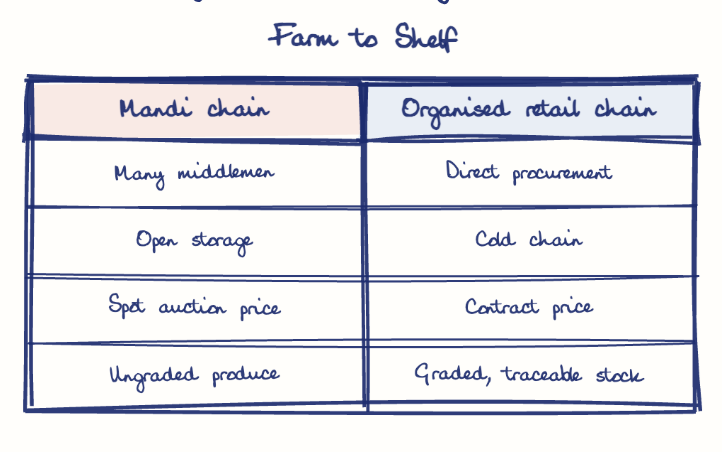
Retailers buy directly from farmers and producer organisations, cutting the commission agent and wholesaler layers of the APMC system and raising the farmer's share of the consumer rupee.
Lower wastage
Investment in pack-houses, reefer trucks and warehouses targets post-harvest losses, which ICAR-CIPHET estimated at ₹92,651 crore a year in 2015.
Demand-led planning
Barcoding, inventory software and sales forecasting let chains match procurement to demand, easing both the gluts that crash farm prices and the shortages that raise retail prices.
From spot to contract trade
Trade shifts from mandi auctions to contract farming and private grades that reward quality.
MSME and export linkages
The 30% sourcing rule draws small manufacturers into national chains, and global retailers can source Indian produce and processed food for their stores abroad.
Risks of concentration
Monopsony power over farmers and pressure on kiranas kept investors wary, so Tesco's 2014 venture with Trent was the only foreign proposal cleared.
This model answer is indicative and the model can make mistakes; please verify key facts independently.
Practise this question
1Get the answer sheet
Sized for this question.
2Write your answer
Timed, by hand.
3Get it marked
Your score and what to fix.
This chapter in the exam
Liberalization9 questions
Asked in 6 of 14 sittings since 2013
- 2025What are the challenges before the Indian economy when the world is moving away from free trade and multilateralism to protectionism and bilateralism ? How can these challenges be met ?
- 2018How would the recent phenomena of protectionism and currency manipulations in world trade affect macroeconomic stability of India?
All 9 questions, sorted by sub-topic, with model answers and practice.
Question from the official UPSC Civil Services (Main) Examination 2013 paper. Answer written by Ghissu's engine and checked against our editorial standards. Found an error? Tell us and we correct it within 48 hours.