2013 · GS Paper 3 · Q4 · 10 marks
Food Security Bill is expected to eliminate hunger and malnutrition in India. Critically discuss various apprehensions in its effective implementation along with the concerns it has generated in WTO.
In short
The Food Security Bill raised apprehensions of PDS leakage, poor targeting, fiscal and storage strain and a cereal-only view of nutrition, and its MSP-based stocks risked breaching WTO subsidy limits. India invoked the Bali Peace Clause for rice in 2020, the first country to do so.
Model answer
Ghissu Editorial · Verified 4 Oct 2026 · 281 words
Leaky PDS
The Shanta Kumar Committee (2015) later found about 46% of PDS grain leaking, so bigger entitlements risked bigger diversion.
Targeting errors
With no fresh poverty list, states risked excluding migrants and the homeless while including the non-poor.
Fiscal and storage strain
A CACP paper led by Ashok Gulati (2012) warned of a swelling subsidy, and FCI gaps left grain rotting, as the Supreme Court noted in PUCL (2010).
Calories, not nutrition
A cereal basket ignores pulses, micronutrients and sanitation, which drive stunting.
Outdated formula
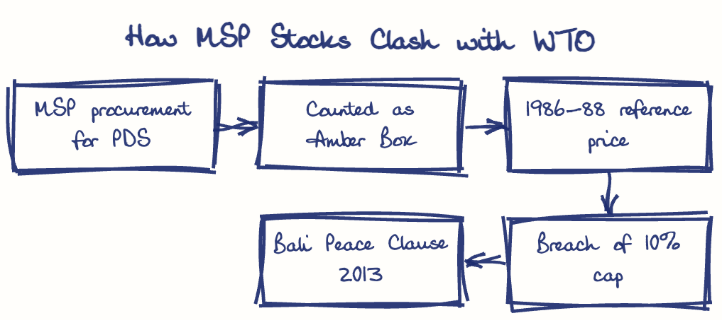
The Agreement on Agriculture values support at 1986-88 prices, pushing India's measured subsidy past the 10% de minimis limit.
Fear of dumping
The US, the EU and the Cairns Group feared public stocks would leak into exports.
Temporary shield
Bali (2013) gave only an interim Peace Clause, which India first invoked for rice in 2020, while developed members hold over 95% of trade-distorting entitlements (RIS, 2025).
This model answer is indicative and the model can make mistakes; please verify key facts independently.
Practise this question
1Get the answer sheet
Sized for this question.
2Write your answer
Timed, by hand.
3Get it marked
Your score and what to fix.
This chapter in the exam
Buffer Stocks and Food Security4 questions
Asked in 3 of 14 sittings since 2013
- 2024Elucidate the importance of buffer stocks for stabilizing agricultural prices in India. What are the challenges associated with the storage of buffer stock? Discuss.
- 2024Explain the role of millets for ensuring health and nutritional security in India.
All 4 questions, sorted by sub-topic, with model answers and practice.
Question from the official UPSC Civil Services (Main) Examination 2013 paper. Answer written by Ghissu's engine and checked against our editorial standards. Found an error? Tell us and we correct it within 48 hours.