2013 · GS Paper 3 · Q16(b) · 5 marks
How does the 3D printing technology work ? List out the advantages and disadvantages of the technology.
In short
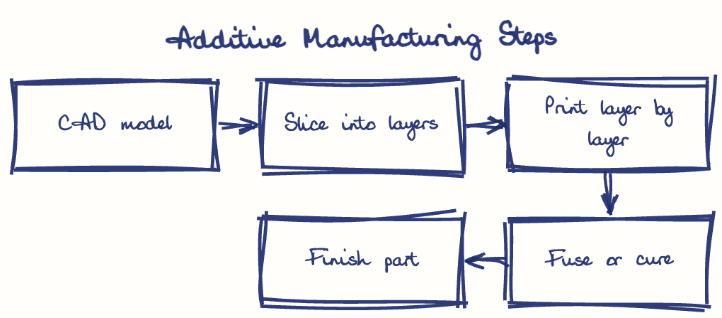
3D printing builds objects layer by layer from a sliced digital design by extruding plastic, curing resin or fusing powder, offering complex custom parts and less waste but high cost, quality limits and misuse risks. Agnikul Cosmos flew a single-piece 3D-printed rocket engine in 2024.
Model answer
Ghissu Editorial · Verified 4 Oct 2026 · 271 words
Digital design
A CAD model or 3D scan is sliced into thin layers that guide the printer.
Building methods
A heated nozzle extrudes thermoplastic, an ultraviolet laser cures resin, or a laser sinters nylon or metal powder.
Complex shapes
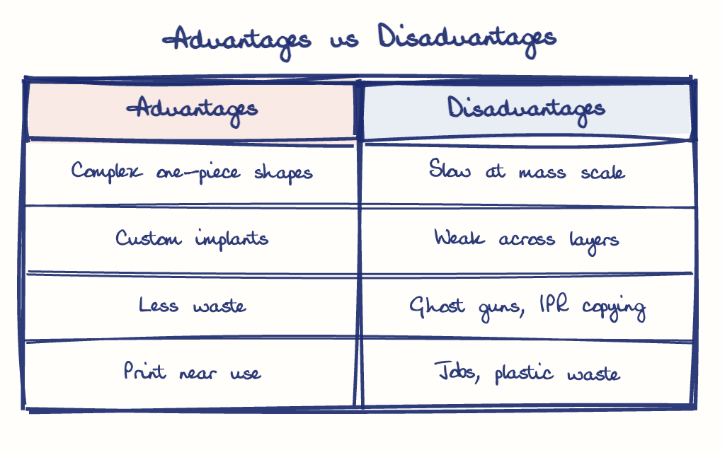
Internal channels and lattices are printed as one piece, cutting part count, as in Agnikul's engine.
Customisation
Patient-specific implants, prosthetics and surgical models are economical one at a time.
Less waste, faster builds
Material goes only where needed, and Bengaluru's 3D-printed post office (2023) rose in under two months.
Slow and costly at scale
Mass production is slower and dearer per unit than moulding, and metal printers are expensive.
Quality limits
Layered parts can be weaker across layers and need certification.
Misuse and IPR
Untraceable "ghost guns" such as the US Liberator pistol (2013) and easy copying of patented designs raise security and legal risks.
Jobs and environment
Some conventional jobs may go, and energy use and plastic waste add environmental costs.
This model answer is indicative and the model can make mistakes; please verify key facts independently.
Practise this question
1Get the answer sheet
Sized for this question.
2Write your answer
Timed, by hand.
3Get it marked
Your score and what to fix.
This chapter in the exam
Developments, Applications and Effects in Everyday Life23 questions
Asked in 13 of 14 sittings since 2013
- 2026Distinguish between a Fast Breeder Reactor (FBR) and a thermal nuclear reactor. In the context of first indigenously developed prototype FBR at Kalpakkam, explain the term 'criticality'. What are its implications for clean energy future of our country? (Answer in 150 words)
- 2025How can India achieve energy independence through clean technology by 2047 ? How can biotechnology play a crucial role in this endeavour ?
All 23 questions, sorted by sub-topic, with model answers and practice.
Question from the official UPSC Civil Services (Main) Examination 2013 paper. Answer written by Ghissu's engine and checked against our editorial standards. Found an error? Tell us and we correct it within 48 hours.