2013 · GS Paper 3 · Q9(b) · 5 marks
Though India allowed Foreign Direct Investment (FDI) in what is called multi-brand retail through the joint venture route in September 2012, the FDI, even after a year, has not picked up. Discuss the reasons.
In short
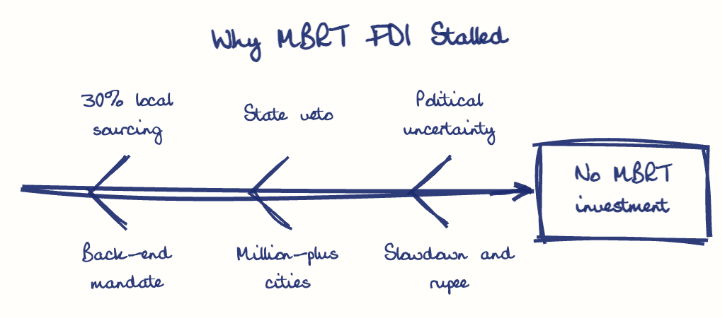
FDI in multi-brand retail did not pick up because the 2012 policy imposed heavy sourcing and back-end conditions, left consent to individual states and faced a threat of reversal before the 2014 election. A year on, only Tesco had applied and Walmart had exited its Bharti venture.
Model answer
Ghissu Editorial · Verified 4 Oct 2026 · 280 words
Sourcing and back-end mandates
A minimum of US$100 million, half of it in back-end infrastructure, and 30% sourcing from Indian small industries clashed with the global sourcing models of chains like Walmart.
Patchwork of state consent
Each state could accept or reject the policy, and only about a dozen states and UTs, such as Delhi and Maharashtra, agreed, ruling out a national network.
Location and format limits
Stores were confined to cities with over 10 lakh people, where land was costliest, and online sales were barred.
Reversal risk
The principal opposition party opposed the policy in Parliament in December 2012 and promised to undo it, so investors waited for the 2014 election.
Scrutiny of the first mover
Walmart's Indian investment drew an Enforcement Directorate probe and a US bribery inquiry, deterring others.
Macroeconomic stress
Slowing growth and a rupee near 68.8 per dollar in August 2013 raised the cost of a long-gestation investment.
This model answer is indicative and the model can make mistakes; please verify key facts independently.
Practise this question
1Get the answer sheet
Sized for this question.
2Write your answer
Timed, by hand.
3Get it marked
Your score and what to fix.
This chapter in the exam
Liberalization9 questions
Asked in 6 of 14 sittings since 2013
- 2025What are the challenges before the Indian economy when the world is moving away from free trade and multilateralism to protectionism and bilateralism ? How can these challenges be met ?
- 2018How would the recent phenomena of protectionism and currency manipulations in world trade affect macroeconomic stability of India?
All 9 questions, sorted by sub-topic, with model answers and practice.
Question from the official UPSC Civil Services (Main) Examination 2013 paper. Answer written by Ghissu's engine and checked against our editorial standards. Found an error? Tell us and we correct it within 48 hours.