2013 · GS Paper 3 · Q1 · 10 marks
With a consideration towards the strategy of inclusive growth, the new Companies Bill, 2013 has indirectly made CSR a mandatory obligation. Discuss the challenges expected in its implementation in right earnest. Also discuss other provisions in the Bill and their implications.
In short
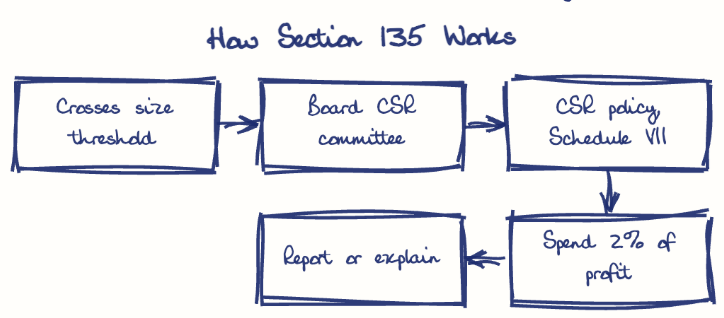
Mandatory CSR under Section 135 of the Companies Act, 2013 faces a weak comply-or-explain start, skewed geography, scarce implementing capacity and an outlay-over-outcome culture. The Act's other provisions, independent and women directors, auditor rotation, class action suits and the NCLT, strengthen corporate governance after Satyam.
Model answer
Ghissu Editorial · Verified 4 Oct 2026 · 313 words
Comply-or-explain loophole
Firms could simply explain non-spending until the 2019 amendment forced unspent sums into an Unspent CSR Account or a Schedule VII fund.
Skewed geography
The local-area preference concentrates money in Maharashtra, Karnataka and Gujarat, leaving the North-East and aspirational districts short.
Capacity and diversion
Scarce credible NGOs and routing through promoters' own trusts led the 2021 Rules to require Form CSR-1 registration of implementing agencies.
Outlay over outcome
Companies report rupees spent, and only those with a CSR obligation of Rs 10 crore or more must assess impact.
Board reform
Section 149 mandates one-third independent directors on listed boards and at least one woman director, improving oversight and diversity.
Auditor rotation
Section 139 rotates auditors after fixed terms, curbing the cosy ties exposed in Satyam.
Investor protection
Class action suits under Section 245 and a statutory SFIO under Section 211 raise the cost of fraud.
One Person Company and NCLT
Sole entrepreneurs gain limited liability, and the NCLT, set up in 2016, centralised company disputes, though compliance costs rise for small firms.
This model answer is indicative and the model can make mistakes; please verify key facts independently.
Practise this question
1Get the answer sheet
Sized for this question.
2Write your answer
Timed, by hand.
3Get it marked
Your score and what to fix.
This chapter in the exam
Inclusive Growth11 questions
Asked in 9 of 14 sittings since 2013
- 2026Examine the view that financial inclusion is an integral part of social and economic inclusion in a country like India. Also throw light on the usefulness of the R.B.I.'s Financial Inclusion Index. (Answer in 150 words)
- 2023Distinguish between 'care economy' and 'monetized economy'. How can care economy be brought into monetized economy through women empowerment?
All 11 questions, sorted by sub-topic, with model answers and practice.
Question from the official UPSC Civil Services (Main) Examination 2013 paper. Answer written by Ghissu's engine and checked against our editorial standards. Found an error? Tell us and we correct it within 48 hours.