2013 · GS Paper 4 · Q6(a) · 10 marks
Given below are three quotations of great moral thinkers/philosophers. For each of these quotations, bring out what it means to you in the present context: "There is enough on this earth for every one's need but for no one's greed." —Mahatma Gandhi
In short
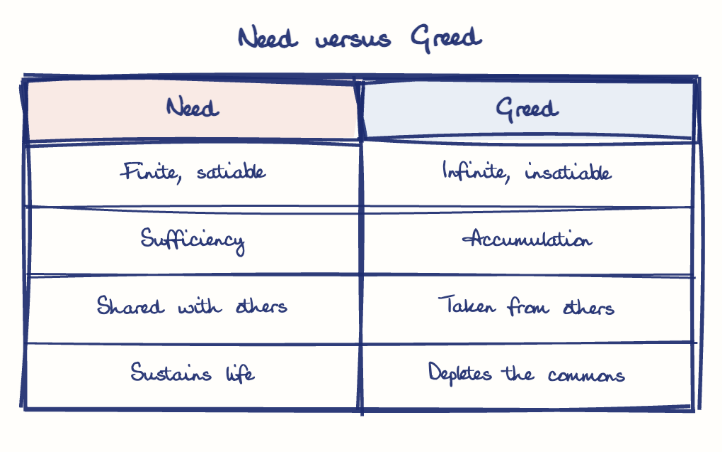
Gandhi's line means scarcity is a failure of human restraint rather than of nature's supply, so need can be met but greed never can. Today it is visible in climate change, with Earth Overshoot Day falling on 24 July in 2025, and India's Mission LiFE answers it.
Model answer
Ghissu Editorial · Verified 4 Oct 2026 · 288 words
Scarcity is moral
The earth's limits bind only when desire outruns necessity; the Isha Upanishad advises enjoying through renunciation.
Trusteeship
Surplus wealth is held in trust for society, an idea echoed in the mandatory CSR of Section 135, Companies Act, 2013.
Personal restraint
For me it means *aparigraha*, since every excess I consume is denied to someone else or to a future generation.
Ecological crisis
Climate change is greed at planetary scale; India pairs climate justice abroad with Mission LiFE (2022), which promotes mindful over mindless consumption.
Corporate fraud
The Harshad Mehta scam (1992) and the Satyam accounting fraud (2009) wiped out ordinary investors' savings, textbook cases of greed dressed as enterprise.
Corruption's human cost
The Morbi bridge collapse (2022), which killed over 130 people after a botched private renovation, shows how cut corners cost lives.
Artificial scarcity
Hoarding of oxygen cylinders and medicines in the 2021 COVID-19 wave denied the poor what they needed to survive.
This model answer is indicative and the model can make mistakes; please verify key facts independently.
Practise this question
1Get the answer sheet
Sized for this question.
2Write your answer
Timed, by hand.
3Get it marked
Your score and what to fix.
This chapter in the exam
Contributions of moral thinkers and philosophers from India23 questions
Asked in 13 of 14 sittings since 2013
- 2026In what ways can an Indian Administrative Officer apply Gandhi's notion of 'trusteeship' to ensure fairness in governance?
- 2025What do each of these quotations convey to you in the present context? "Those who in trouble untroubled are, Will trouble trouble itself." – Thiruvalluvar
All 23 questions, sorted by sub-topic, with model answers and practice.
Question from the official UPSC Civil Services (Main) Examination 2013 paper. Answer written by Ghissu's engine and checked against our editorial standards. Found an error? Tell us and we correct it within 48 hours.