2014 · GS Paper 2 · Q17 · 12 marks
The aim of Information Technology Agreements (ITAs) is to lower all taxes and tariffs on information technology products by signatories to zero. What impact would such agreements have on India's interests?
In short
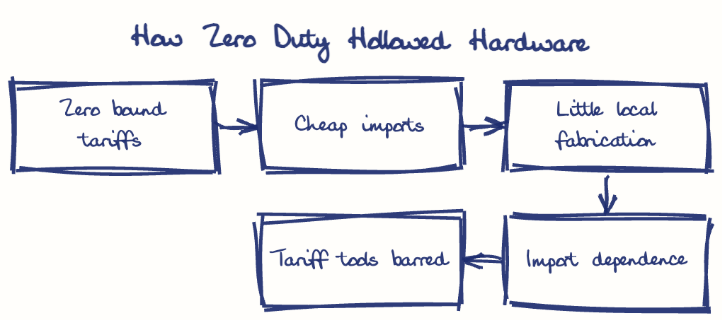
Zero-tariff IT agreements helped India's software exports, mobile connectivity and e-governance by cheapening hardware, but they hollowed out domestic electronics manufacturing and curbed tariff policy space. WTO panels ruled in 2023 against the duties India levied on phones and telecom equipment between 2014 and 2018.
Model answer
Ghissu Editorial · Verified 4 Oct 2026 · 275 words
Cheaper digital inputs
Duty-free computers and networking gear lowered costs for the IT-BPM industry, India's largest services export earner.
Mass connectivity
Cheaper handsets and telecom equipment drove the mobile revolution and later carried Aadhaar and UPI to users.
Assembly and re-export
Zero-duty inputs helped the PLI scheme for mobile phones (2020), with smartphone exports crossing Rs 2 lakh crore in 2024-25.
Import dependence
India built little component or chip capacity, and the National Policy on Electronics (2012) came amid warnings that electronics imports could rival the oil bill by 2020.
Lost policy space
Duties of up to 20% on phones and telecom gear (2014-18) were challenged by the EU, Japan and Chinese Taipei, and WTO panels ruled against India in 2023.
Asymmetric bargain
The ITA frees goods trade, where China dominates, but ignores services and professional mobility, India's real strengths; hence India stayed out of ITA-II (Nairobi, 2015).
This model answer is indicative and the model can make mistakes; please verify key facts independently.
Practise this question
1Get the answer sheet
Sized for this question.
2Write your answer
Timed, by hand.
3Get it marked
Your score and what to fix.
This chapter in the exam
Global6 questions
Asked in 6 of 14 sittings since 2013
- 2026“BRICS acts as a powerful counterweight in global governance, actively amplifying the voice and influence of the Global South.” Explain the role of BRICS in projecting itself as an alternative to other groupings.
- 2025"With the waning of globalization, post-Cold War world is becoming a site of sovereign nationalism." Elucidate.
All 6 questions, sorted by sub-topic, with model answers and practice.
Question from the official UPSC Civil Services (Main) Examination 2014 paper. Answer written by Ghissu's engine and checked against our editorial standards. Found an error? Tell us and we correct it within 48 hours.