2014 · GS Paper 2 · Q10 · 12 marks
The penetration of Self Help Groups (SHGs) in rural areas in promoting participation in development programmes is facing socio-cultural hurdles. Examine.
In short
SHG penetration is held back by patriarchal control of women's mobility and loans, caste-based exclusion, seclusion norms and illiteracy, which keep the poorest out of programmes routed through SHGs. Bihar's Jeevika shows these hurdles can be overcome by patient community mobilisation.
Model answer
Ghissu Editorial · Verified 4 Oct 2026 · 277 words
Patriarchal gatekeeping
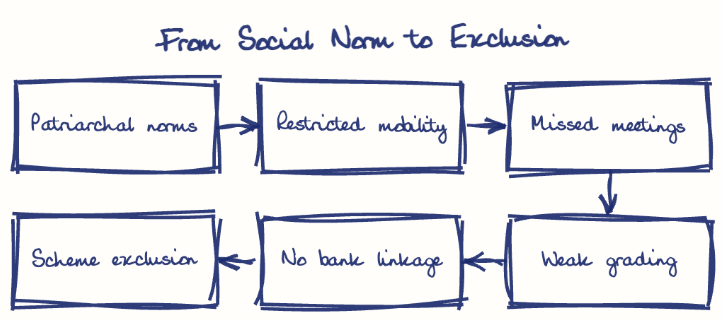
Families decide whether a woman may attend meetings or visit a bank, and research since Goetz and Sen Gupta (1996) shows male relatives often control loans taken in women's names.
Caste lines
Groups form along caste lines, leaving Dalit and Adivasi women out or in weaker groups while dominant castes capture leadership.
Seclusion and illiteracy
Purdah limits women's public role in parts of the Hindi heartland, and members who cannot read depend on others to keep the books.
Paper groups
Groups formed only to meet SGSY targets dissolved once the subsidy was spent.
Diverted credit
Social pressure pushes loans towards weddings and old debts instead of livelihoods.
Hurdles can be overcome
Bihar's Jeevika mobilised women in a patriarchal setting, and its members helped bring prohibition in 2016.
Not only culture
Bank reluctance to lend without collateral and distant branches also limit reach, so culture is one barrier among several.
This model answer is indicative and the model can make mistakes; please verify key facts independently.
Practise this question
1Get the answer sheet
Sized for this question.
2Write your answer
Timed, by hand.
3Get it marked
Your score and what to fix.
This chapter in the exam
SHGs6 questions
Asked in 6 of 14 sittings since 2013
- 2021Can the vicious cycle of gender inequality, poverty and malnutrition be broken through microfinancing of women SHGs? Explain with examples.
- 2020"Micro-Finance as an anti-poverty vaccine, is aimed at asset creation and income security of the rural poor in India". Evaluate the role of the Self Help Groups in achieving the twin objectives along with empowering women in rural India.
All 6 questions, sorted by sub-topic, with model answers and practice.
Question from the official UPSC Civil Services (Main) Examination 2014 paper. Answer written by Ghissu's engine and checked against our editorial standards. Found an error? Tell us and we correct it within 48 hours.