2014 · GS Paper 3 · Q15 · 12 marks
Environmental Impact Assessment studies are increasingly undertaken before a project is cleared by the Government. Discuss the environmental impacts of coal-fired thermal plants located at coal pitheads.
In short
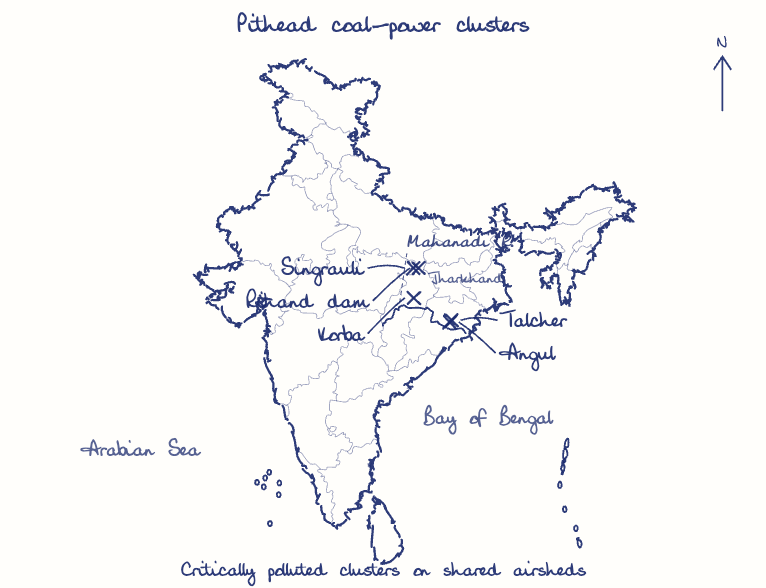
Pithead coal plants concentrate air pollution, fly ash, toxic metals, water stress, forest loss and displacement in one landscape, so their impacts compound. CPCB's 2009 pollution index named Singrauli, Korba, Angul-Talcher and Chandrapur among 43 critically polluted clusters.
Model answer
Ghissu Editorial · Verified 4 Oct 2026 · 268 words
Gaseous Emissions
Sulphur dioxide, nitrogen oxides and particulates rise, while the December 2015 norms requiring flue gas desulphurisation keep slipping.
Fly Ash Burden
Indian coal is 30-45% ash; dyke breaches at Essar Mahan, NTPC Vindhyachal (2019) and Reliance Sasan (2020) in Singrauli buried fields in slurry.
Toxic Metals
A Centre for Science and Environment study (2012) found high mercury in the blood of Singrauli residents.
Carbon Lock-in
Coal powers over 74% of India's electricity (PIB, 2025), so each plant commits decades of emissions.
Water and Forest
Cooling drains reservoirs such as Rihand and warm discharge harms aquatic life, while pits, dumps and ash ponds strip forests and fragment elephant habitat.
Cumulative Pollution
CPCB's Comprehensive Environmental Pollution Index (2009) put Singrauli, Korba, Angul-Talcher and Chandrapur among 43 critically polluted clusters, triggering a 2010 moratorium.
Double Displacement
Tribal families lose land to the mine and then to the plant; North Karanpura coalfield, host to NTPC's 1,980 MW plant, lies beneath 203 villages.
This model answer is indicative and the model can make mistakes; please verify key facts independently.
Practise this question
1Get the answer sheet
Sized for this question.
2Write your answer
Timed, by hand.
3Get it marked
Your score and what to fix.
This chapter in the exam
Environmental Impact Assessment4 questions
Asked in 4 of 14 sittings since 2013
- 2024What role do environmental NGOs and activists play in influencing Environmental Impact Assessment (EIA) outcomes for major projects in India? Cite four examples with all important details.
- 2020How does the draft Environment Impact Assessment (EIA) Notification, 2020 differ from the existing EIA Notification, 2006?
All 4 questions, sorted by sub-topic, with model answers and practice.
Question from the official UPSC Civil Services (Main) Examination 2014 paper. Answer written by Ghissu's engine and checked against our editorial standards. Found an error? Tell us and we correct it within 48 hours.