2014 · GS Paper 3 · Q7 · 12 marks
Explain how Private Public Partnership arrangements, in long gestation infrastructure projects, can transfer unsustainable liabilities to the future. What arrangements need to be put in place to ensure that successive generations' capacities are not compromised?
In short
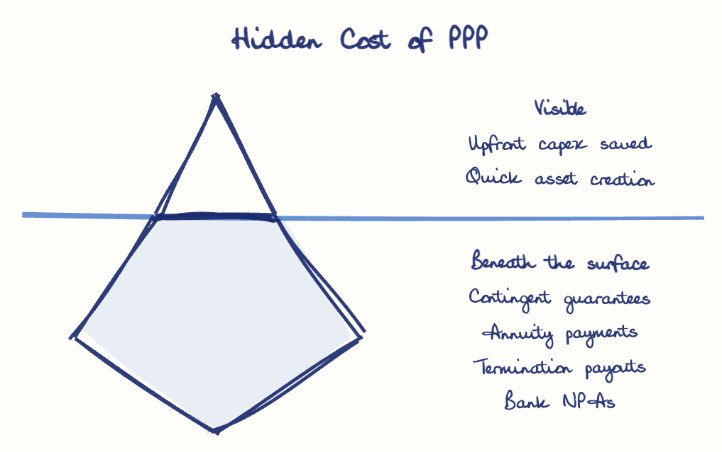
PPPs in long-gestation projects can burden the future through off-budget guarantees, multi-year annuities, aggressive bids that end in bailouts and costly, run-down assets. Recording these liabilities in the budget, rigorous appraisal, balanced contracts with independent regulators as the Kelkar Committee (2015) urged, and long-tenor finance protect future generations.
Model answer
Ghissu Editorial · Verified 4 Oct 2026 · 271 words
Contingent liabilities
Guarantees and termination payments stay off the fiscal deficit until they fall due, as in the Delhi Airport Metro Express dispute.
Pre-committed annuities
Hybrid Annuity contracts spread payments over 15 years, binding future budgets.
Bids and bailouts
Over-optimistic 2009-12 highway bids fed the "twin balance sheet" problem (Economic Survey 2016-17), and the IL&FS default (2018) showed how infrastructure debt can turn systemic.
Tolls and worn assets
Indexed tolls burden future users, and weak handback norms return run-down assets; the UK ended new PFI deals in 2018.
Fiscal disclosure
Record guarantees and annuities in the budget on accrual principles, cap them under FRBM rules and screen projects with the IMF-World Bank PFRAM tool.
Rigorous appraisal
Value-for-money tests and independent traffic studies by the PPP Appraisal Committee weed out unviable bids.
Balanced contracts
Fair risk allocation, rule-based renegotiation and independent regulators, as the Kelkar Committee urged, limit opportunistic claims.
Patient finance
NaBFID (2021) and InvITs match long assets with long money.
This model answer is indicative and the model can make mistakes; please verify key facts independently.
Practise this question
1Get the answer sheet
Sized for this question.
2Write your answer
Timed, by hand.
3Get it marked
Your score and what to fix.
This chapter in the exam
Investment Models4 questions
Asked in 4 of 14 sittings since 2013
- 2022Why is Public Private Partnership (PPP) required in infrastructural projects ? Examine the role of PPP model in the redevelopment of Railway Stations in India.
- 2020Explain the meaning of investment in an economy in terms of capital formation. Discuss the factors to be considered while designing a concession agreement between a public entity and a private entity.
All 4 questions, sorted by sub-topic, with model answers and practice.
Question from the official UPSC Civil Services (Main) Examination 2014 paper. Answer written by Ghissu's engine and checked against our editorial standards. Found an error? Tell us and we correct it within 48 hours.