2014 · GS Paper 3 · Q3 · 12 marks
There is also a point of view that Agricultural Produce Market Committees (APMCs) set up under the State Acts have not only impeded the development of agriculture but also have been the cause of food inflation in India. Critically examine.
In short
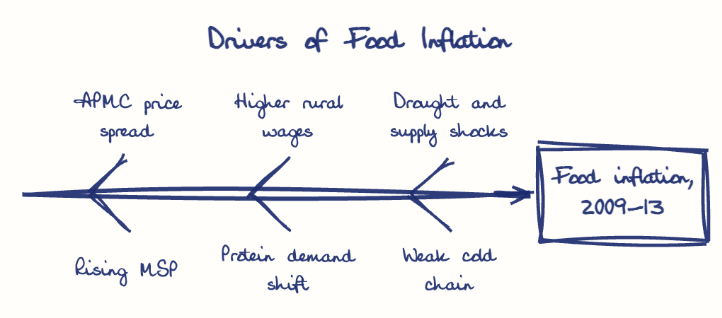
The charge is only partly valid: APMC licence monopolies, layered fees and curbs on private trade widened the price spread and impeded market development, but food inflation was chiefly driven by MSP hikes, rural wages, protein demand and supply shocks. Bihar's 2006 repeal of its APMC Act produced no private markets.
Model answer
Ghissu Editorial · Verified 4 Oct 2026 · 291 words
Licence monopoly
Compulsory first sale and scarce licences let a few commission agents dominate arrivals and corner produce such as onions.
Layered fees
Fees and commissions widen the price spread; farmers get about a third of the consumer rupee for tomatoes, onions and potatoes (RBI working paper, 2024).
Fees not reinvested
The CAG (Report No. 5 of 2025) found ₹392.28 crore of Uttar Pradesh mandi-fund interest diverted in 2016-21.
Private investment blocked
Direct buying and contract farming needed APMC permission, so the Model APMC Act 2003 was adopted slowly.
Price discovery
Mandis gave open auctions and assured payment, sustaining Punjab-Haryana procurement.
Abolition alone failed
Bihar repealed its APMC Act in 2006, yet private markets did not emerge.
Structural drivers
MSP hikes, rising rural wages and a shift towards protein foods (Subir Gokarn, RBI, 2011) drove inflation more than mandi rules.
Supply shocks
The 2009 drought and the 2013 onion shortfall caused spikes that cartels amplified but did not create.
This model answer is indicative and the model can make mistakes; please verify key facts independently.
Practise this question
1Get the answer sheet
Sized for this question.
2Write your answer
Timed, by hand.
3Get it marked
Your score and what to fix.
This chapter in the exam
Storage, Transport and Marketing of Agricultural Produce5 questions
Asked in 5 of 14 sittings since 2013
- 2026Explain the factors responsible for inefficiency of agri-produce marketing. How e-commerce helps to reduce inefficiency of agri-produce marketing? Explain. (Answer in 150 words)
- 2025Elaborate the scope and significance of supply chain management of agricultural commodities in India.
All 5 questions, sorted by sub-topic, with model answers and practice.
Question from the official UPSC Civil Services (Main) Examination 2014 paper. Answer written by Ghissu's engine and checked against our editorial standards. Found an error? Tell us and we correct it within 48 hours.