2025 · GS Paper 3 · Q4 · 10 marks
Elaborate the scope and significance of supply chain management of agricultural commodities in India.
In short
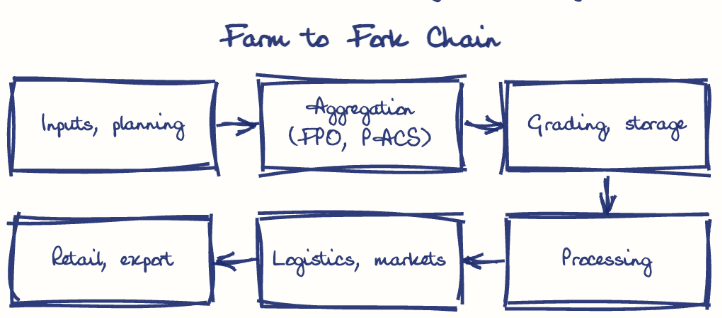
Agricultural supply chain management spans input planning, aggregation, storage, processing, logistics and retail, and it decides how much of India's record harvest becomes farmer income, stable prices and exports. Farmers keep only about a third of the consumer rupee for tomatoes, onions and potatoes (RBI, 2024).
Model answer
Ghissu Editorial · Verified 4 Oct 2026 · 273 words
Upstream
Demand-led crop planning, quality seed, credit and aggregation through FPOs and PACS fix volume and grade before harvest.
Storage and processing
8,815 cold storages hold 40.21 million tonnes (PIB, 2025), still short for perishables, while PM Kisan SAMPADA food parks and the Agriculture Infrastructure Fund (2020) add value and speed.
Downstream markets
e-NAM, organised retail, PDS and exporters close the chain with grading and traceability.
Farmer income
Shorter chains and aggregation raise the farmer's share, as Amul's cooperative model passes most of the consumer price back to milk producers.
Less wastage and inflation
Efficient chains cut post-harvest losses and the onion and tomato price spikes Operation Greens (2018) targets.
Exports
Agricultural exports rose from USD 34.5 billion in FY20 to USD 51.1 billion in FY25, with processed food at 20.4% of agri-food exports (PIB, 2026).
Resilience
In the 2020 lockdown, states with better logistics scores saw higher mandi arrivals (Azim Premji University, 2023).
This model answer is indicative and the model can make mistakes; please verify key facts independently.
Practise this question
1Get the answer sheet
Sized for this question.
2Write your answer
Timed, by hand.
3Get it marked
Your score and what to fix.
This chapter in the exam
Storage, Transport and Marketing of Agricultural Produce5 questions
Asked in 5 of 14 sittings since 2013
- 2026Explain the factors responsible for inefficiency of agri-produce marketing. How e-commerce helps to reduce inefficiency of agri-produce marketing? Explain. (Answer in 150 words)
- 2022What are the main bottlenecks in upstream and downstream process of marketing of agricultural products in India ?
All 5 questions, sorted by sub-topic, with model answers and practice.
Question from the official UPSC Civil Services (Main) Examination 2025 paper. Answer written by Ghissu's engine and checked against our editorial standards. Found an error? Tell us and we correct it within 48 hours.