2015 · GS Paper 2 · Q16 · 12 marks
For achieving the desired objectives, it is necessary to ensure that the regulatory institutions remain independent and autonomous. Discuss in the light of the experiences in recent past.
In short
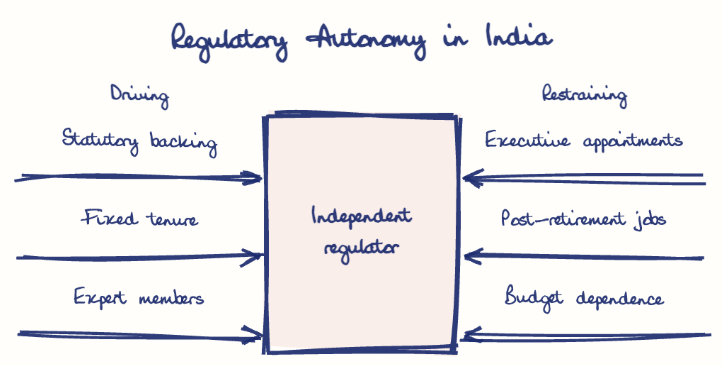
Regulators meet objectives such as investor confidence and fair competition only when insulated from the governments that often own the firms they regulate. The 2014 TRAI Act ordinance, the 2G case and the 2018 RBI Section 7 episode show how fragile that autonomy has been.
Model answer
Ghissu Editorial · Verified 4 Oct 2026 · 277 words
Credible commitment
Investors trust rules that do not shift with elections, and SEBI's stand in the Sahara case, upheld by the Supreme Court in 2012, strengthened that confidence.
Neutral umpire
Only an autonomous regulator can treat state-owned banks, LIC and BSNL on par with private rivals.
Expertise over expedience
The CCI's Rs 6,307 crore cement cartel penalty (2012) and TRAI's 2016 ban on discriminatory data tariffs show expert bodies resisting powerful interests.
Appointments and exits
Regulators are chosen by the ministries they oversee, and post-retirement government jobs remain open, as the 2014 TRAI amendment showed.
Policy bypass
In the 2G case (2012) the Supreme Court cancelled 122 licences after TRAI's spectrum advice was selectively applied.
Tariff suppression
State electricity regulators withheld tariff revisions under political pressure, deepening discom losses that UDAY (2015) had to rescue.
Central bank friction
The first-ever Section 7 consultations under the RBI Act in 2018 preceded Governor Urjit Patel's resignation.
This model answer is indicative and the model can make mistakes; please verify key facts independently.
Practise this question
1Get the answer sheet
Sized for this question.
2Write your answer
Timed, by hand.
3Get it marked
Your score and what to fix.
This chapter in the exam
Regulatory & Quasi-Judicial Bodies5 questions
Asked in 5 of 14 sittings since 2013
- 2021The jurisdiction of the Central Bureau of Investigation (CBI) regarding lodging an FIR and conducting probe within a particular state is being questioned by various States. However, the power of States to withhold consent to the CBI is not absolute. Explain with special reference to the federal character of India.
- 2016What is quasi judicial body? Explain with the help of concrete examples.
All 5 questions, sorted by sub-topic, with model answers and practice.
Question from the official UPSC Civil Services (Main) Examination 2015 paper. Answer written by Ghissu's engine and checked against our editorial standards. Found an error? Tell us and we correct it within 48 hours.