2015 · GS Paper 3 · Q14 · 12 marks
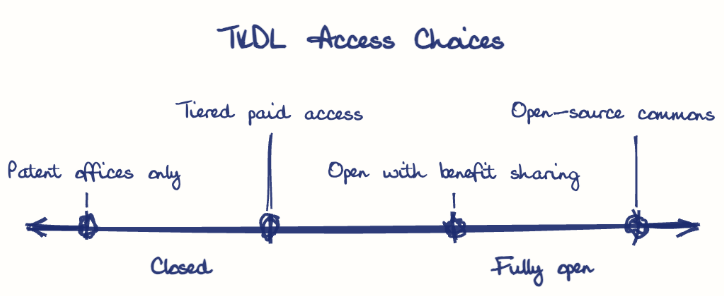
India's Traditional Knowledge Digital Library (TKDL), which has a database containing formatted information on more than 2 million medicinal formulations is proving a powerful weapon in the country's fight against erroneous patents. Discuss the pros and cons of making this database publicly available under open-source licensing.
In short
Open-source release of TKDL would give examiners worldwide prior art and boost research, but would ease biopiracy by derivation and surrender benefit-sharing leverage, so tiered access is wiser. India built TKDL in 2001 after costly battles to revoke the turmeric and neem patents.
Model answer
Ghissu Editorial · Verified 4 Oct 2026 · 285 words
Universal prior art
All examiners and opponents worldwide, not only the EPO and USPTO, could cite it, blocking wrong patents before grant.
Research and innovation
AYUSH researchers and start-ups could mine formulations for drug leads, as Tu Youyou's reading of a classical Chinese text yielded artemisinin (Nobel 2015).
Validation and commons
Open data invites clinical scrutiny and keeps community knowledge in a public domain that no single firm can enclose.
Biopiracy by derivation
A translated, searchable database is a ready lead list for firms abroad to patent derivatives such as isolated molecules, which an open licence cannot stop.
Lost benefit sharing
The Biological Diversity Act, 2002 and the Nagoya Protocol rest on prior informed consent and benefit sharing; free release surrenders that leverage.
Enforcement and consent
Licence terms are hard to enforce abroad, the knowledge holders were never consulted, and unvalidated remedies risk unsafe self-medication.
This model answer is indicative and the model can make mistakes; please verify key facts independently.
Practise this question
1Get the answer sheet
Sized for this question.
2Write your answer
Timed, by hand.
3Get it marked
Your score and what to fix.
This chapter in the exam
Intellectual Property Rights5 questions
Asked in 5 of 14 sittings since 2013
- 2024What is the present world scenario of intellectual property rights with respect to life materials? Although, India is second in the world to file patents, still only a few have been commercialized. Explain the reasons behind this less commercialization.
- 2019How is the Government of India protecting traditional knowledge of medicine from patenting by pharmaceutical companies?
All 5 questions, sorted by sub-topic, with model answers and practice.
Question from the official UPSC Civil Services (Main) Examination 2015 paper. Answer written by Ghissu's engine and checked against our editorial standards. Found an error? Tell us and we correct it within 48 hours.